The short answer
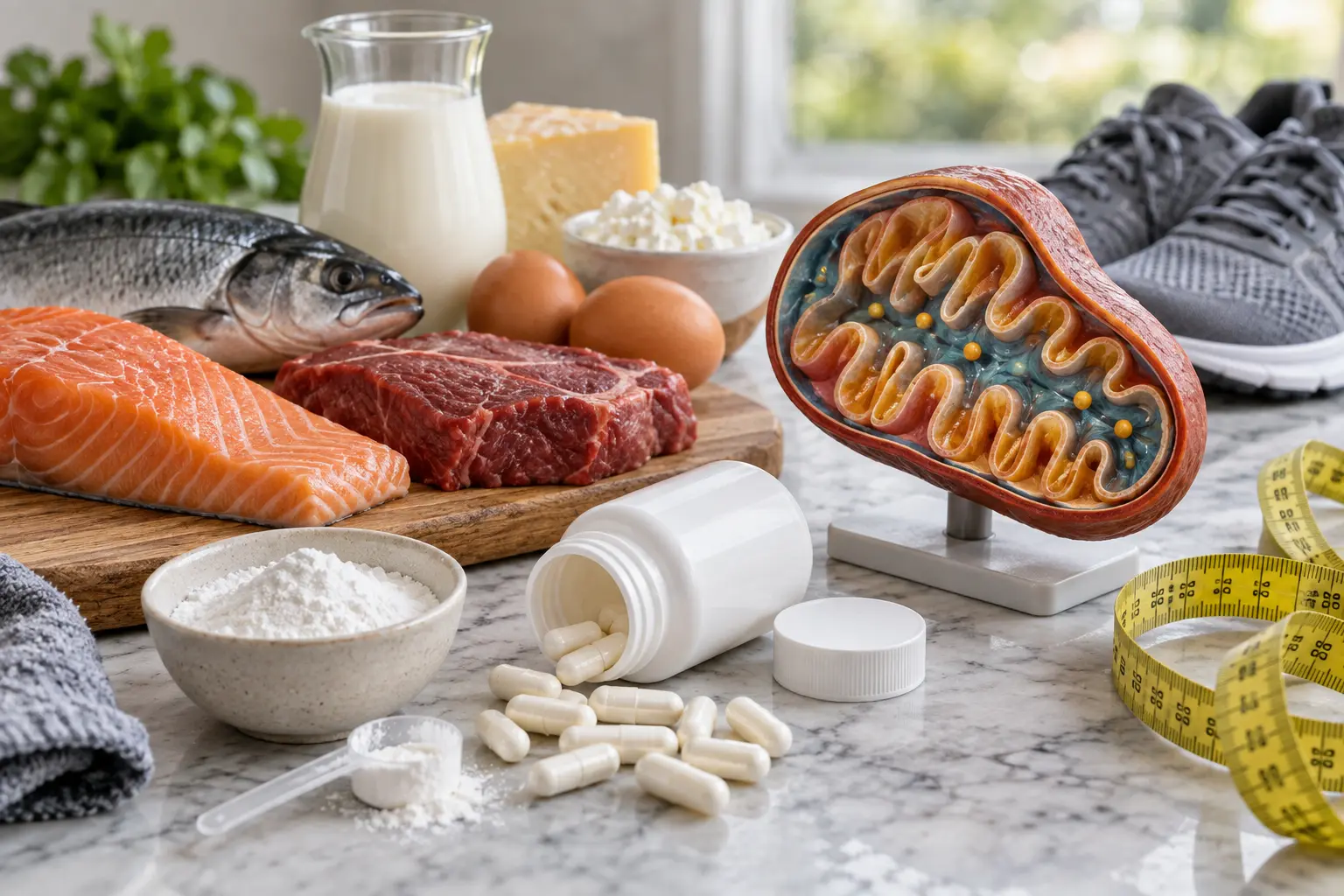
L-carnitine has a real role in transporting long-chain fatty acids into mitochondria, but extra oral L-carnitine does not automatically accelerate fat burning. Meta-analyses suggest a modest average weight effect in some adults, with important variation across populations, doses, and trials.
This updated canonical guide covers mechanism, clinical weight and body-composition evidence, food versus supplements, forms, dose transparency, safety, and realistic expectations.
What the mechanism can—and cannot—show
The body normally makes carnitine and obtains it from food. Deficiency is different from ordinary supplement use in a generally healthy adult. Oral absorption is limited, muscle carnitine does not necessarily rise quickly, and fat oxidation depends on energy demand and many regulatory steps—not merely the presence of a transport molecule.
What human evidence says
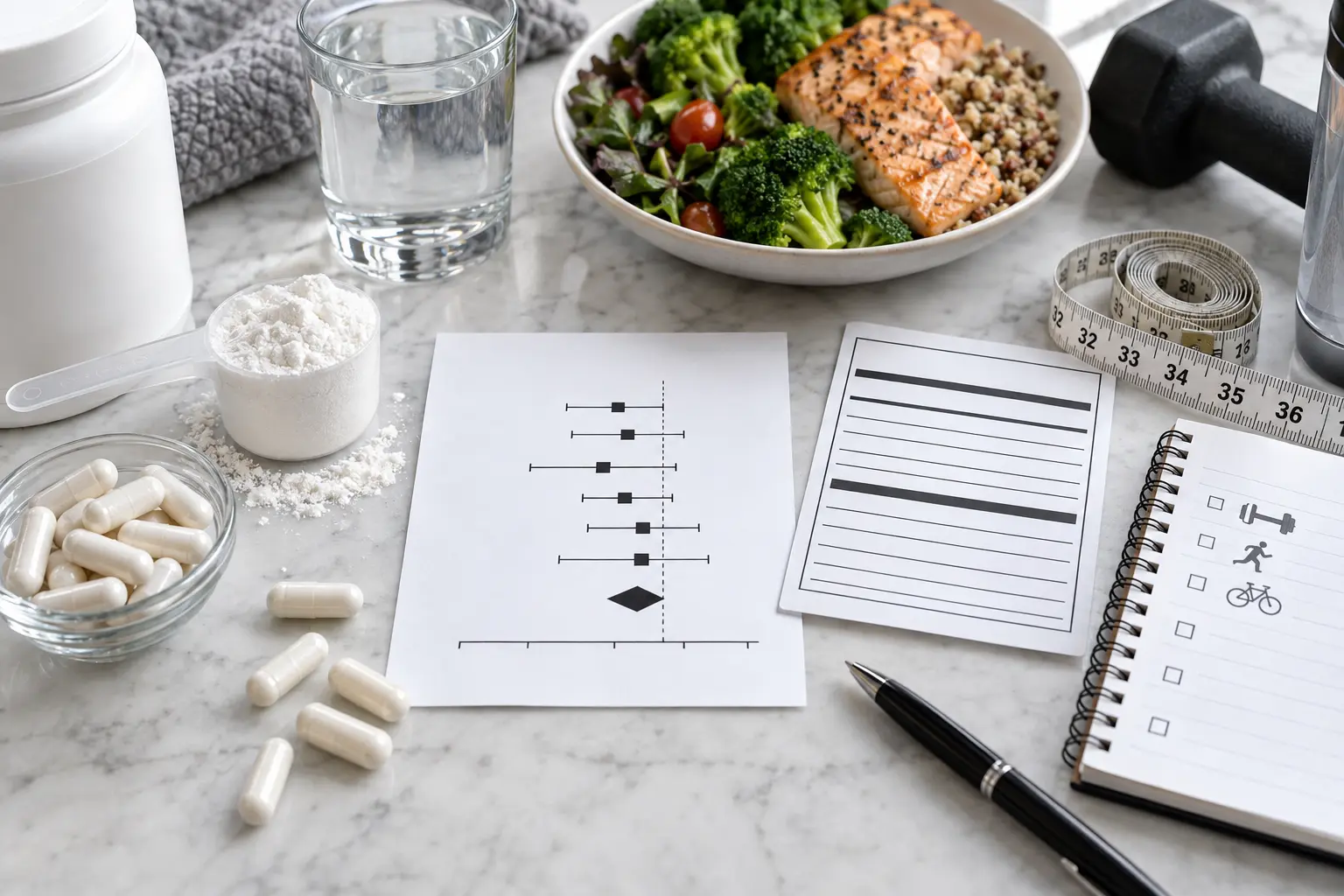
Meta-analyses of randomized trials report a small average reduction in weight and sometimes fat mass, especially in adults with overweight or obesity, but heterogeneity is substantial and some outcomes such as body-fat percentage or waist are inconsistent. The average is not a guarantee, and results from clinical populations may not transfer to a healthy buyer.
A five-step label audit
- Identify L-carnitine, acetyl-L-carnitine, L-carnitine L-tartrate, or another form.
- Calculate the full daily milligrams rather than reading the front label.
- Match dose, population, duration, and body-composition outcome to trials.
- Expect a modest or absent effect instead of rapid visible fat loss.
- Review gastrointestinal effects, odor, medicines, seizure history, kidney disease, pregnancy, and other concerns professionally.
Worked example
A product shows fat entering a mitochondrion and provides 500 mg of L-carnitine in a blend. The diagram explains physiology, not efficacy. The useful comparison is the exact form and daily amount against trials, the population studied, the additional change versus placebo, and whether lifestyle treatment occurred in both groups.
Related Active Body Hub guides
Put the evidence beside realistic fat-burner effects, clinical meaning in weight-loss research, and the true daily dose.
Match the carnitine form and population to the claim
L-carnitine participates in transporting long-chain fatty acids into mitochondria, but that normal physiology does not imply that swallowing extra carnitine makes a person's body use more stored fat. Trials differ in form, dose, duration, participant health, and background diet. A result in a population with a particular clinical profile should not be advertised as a predictable effect in all healthy adults. The first task is to identify the exact form on the current label rather than treating every “carnitine” name as interchangeable.
Some products pair L-carnitine with caffeine or other thermogenic ingredients. If users feel more alert, that sensation may be related to the stimulants and cannot establish a carnitine-specific fat-loss effect. Read whether a cited study tested carnitine alone or a combination, and whether it measured body weight, fat mass, exercise output, or a short-term blood marker. The unit and timeframe of each result matter more than the headline “helps transport fat.”
Check serving arithmetic: milligrams per capsule, capsules per day, and whether the study dose matches the marketed daily amount. If a review pools multiple populations and durations, its average may not predict an individual outcome. Consider digestive tolerability and relevant medical conditions with a healthcare professional when appropriate. Do not infer long-term safety from a short study that reported few adverse events.
Before buying a carnitine-based fat burner, compare the complete product with a non-supplement plan that already includes sustainable meals, activity, and sleep. Define what change you would measure, over what period, and what would make you stop. If the only product-specific evidence is a pathway diagram or a trial of a different carnitine preparation, classify the marketed benefit as unverified. A modest ingredient-level signal cannot be silently upgraded to proof for the complete blend.
Where Fat Burn Active fits
The same rules apply to Fat Burn Active. The presence of a familiar botanical, absorption enhancer, or fat-metabolism ingredient does not prove that the finished formula produces meaningful weight loss. Assess disclosed daily amounts, stimulant exposure, contraindications, and direct product-level evidence.
The official Fat Burn Active page lists a multi-ingredient thermogenic formula, but the buying decision should follow the evidence check above. Compare our independent review, then, if the product remains a reasonable fit, check the current price and label on the official site. We may receive a commission at no additional cost.
Sources
- NIH ODS: Carnitine fact sheet
- 2020 meta-analysis of L-carnitine and weight
- 2016 systematic review and meta-analysis
- 2020 meta-analysis of anthropometric outcomes
- 2024 meta-analysis of randomized trials
- NIH ODS: Weight-loss supplements
Evidence reviewed September 16, 2026. Educational information only; not medical advice.