Does rhodiola support weight loss?
Direct randomized evidence for meaningful weight or fat loss is weak. Marketing often links Rhodiola rosea to cortisol, energy, AMPK, exercise, or fat-cell mechanisms. These pathways may justify research but cannot substitute for trials measuring sustained body composition.
Reduced fatigue could help a person remain active, yet it could also have no effect on energy intake or weight. An indirect behavioral possibility should be described as such, not converted into a guaranteed metabolic effect.
Standardization and species matter
Products may differ in species identity, root material, rosavins, salidroside, extraction, and dose. Adulteration or substitution is a quality concern. Match the exact standardized extract to the cited trial and look for independent identity testing.
A “clinical dose” badge is incomplete without the population, outcome, and duration. Research on burnout or fatigue does not establish weight-management effectiveness.
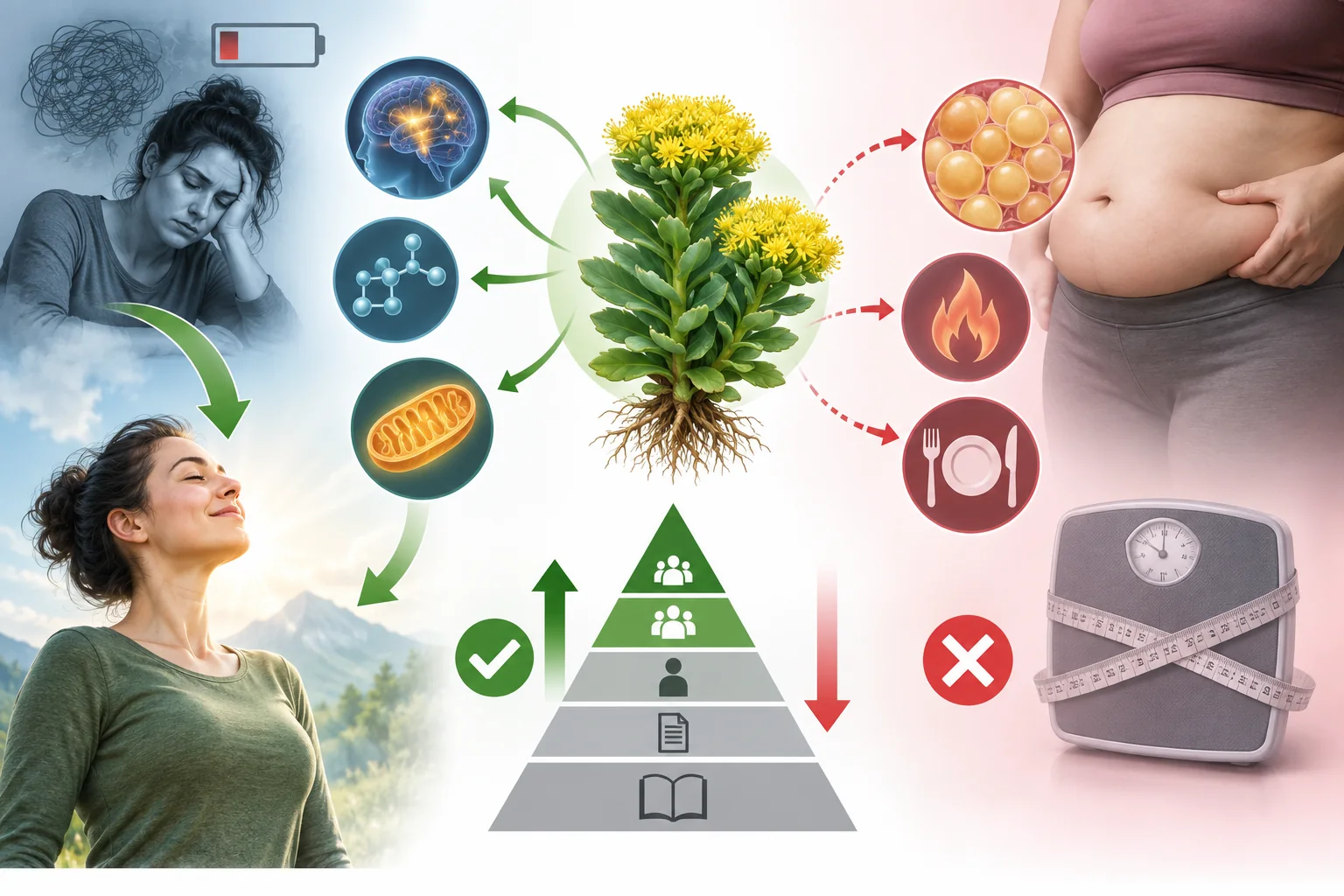
Energy or stress claims do not establish fat loss
Rhodiola rosea products are often marketed for fatigue or stress. A weight-loss advertisement may connect those themes to more exercise or less stress eating, but that is a chain of assumptions unless intake, activity, and body-weight outcomes were measured. Cell pathways and animal findings are research starting points. Look for randomized human trials that actually measure sustained weight or body composition at a comparable dose before accepting a direct weight-management claim.
Species, plant part, extraction, and standardization matter. Labels sometimes list rhodiola without enough detail to match the material in a study. A product may also combine it with caffeine, making “more energy” impossible to attribute to rhodiola alone. Check the complete serving, timing, other stimulants, and whether the paper examined the same preparation or an isolated extract.
Even if a short trial finds better perceived fatigue, that does not guarantee more long-term physical activity. A person might exercise more, less, or the same, and appetite can change too. A practical alternative is to address an observable bottleneck directly: sleep, scheduling a walk, a tolerable training plan, or food availability. That creates a clearer experiment than buying a blend because it mentions cortisol or AMPK.
If considering rhodiola, review medicines, pregnancy status, and relevant health conditions with a professional; avoid combining multiple new botanicals and stimulants at once. Define the specific outcome you want to monitor and stop for concerning symptoms. The honest weight-loss verdict remains limited until directly relevant, replicated human outcomes exist. A finished Fat Burn Active formula cannot borrow evidence from a separate rhodiola stress study. A useful next step is to compare the exact label, total caffeine, intended use, and independent product-level evidence before considering a purchase.
Watch for a second common jump: a study in athletes or people reporting fatigue may be used to sell a weight-loss product to a broad audience. The participants, endpoint, and actual amount of movement may all differ. Write down what the trial measured before reading the seller’s interpretation. If it measured subjective energy rather than intake or body fat, keep that result in the energy column. It should not become a numeric fat-loss prediction.
Where Fat Burn Active fits
Fat Burn Active is marketed as a multi-ingredient thermogenic with listed botanical extracts and caffeine sources. Research on this page’s single ingredient cannot prove that finished formula, particularly when the ingredient is absent or supplied in a different form. Likewise, thermogenic evidence cannot validate a separate adaptogen or seaweed product.
If comparing categories, decide whether you want a stimulant-based formula, a non-stimulant single ingredient, or no supplement. Then review total caffeine, exact doses, medicines, sleep, and finished-product evidence.
Frequently asked questions
Is rhodiola a stimulant?
It may feel activating to some users, but it is not equivalent to caffeine and still has interaction questions.
Can it lower cortisol and burn fat?
That chain of claims is not established as a meaningful human weight-loss outcome.
Should I take it before exercise?
Performance and safety depend on the extract, medicines, health, and training context.
Can I combine it with antidepressants?
Seek clinician or pharmacist review because neuroactive effects and interactions may matter.
Sources
- NCCIH: Rhodiola
- EMA: Rhodiola Rosea Herbal Monograph
- PubMed: Rhodiola Systematic Review
- NIH ODS: Weight-Loss Supplements
- FDA: Dietary Supplement Questions and Answers
Sources reviewed September 18, 2026. Educational information only.