What a 10:1 ratio actually means
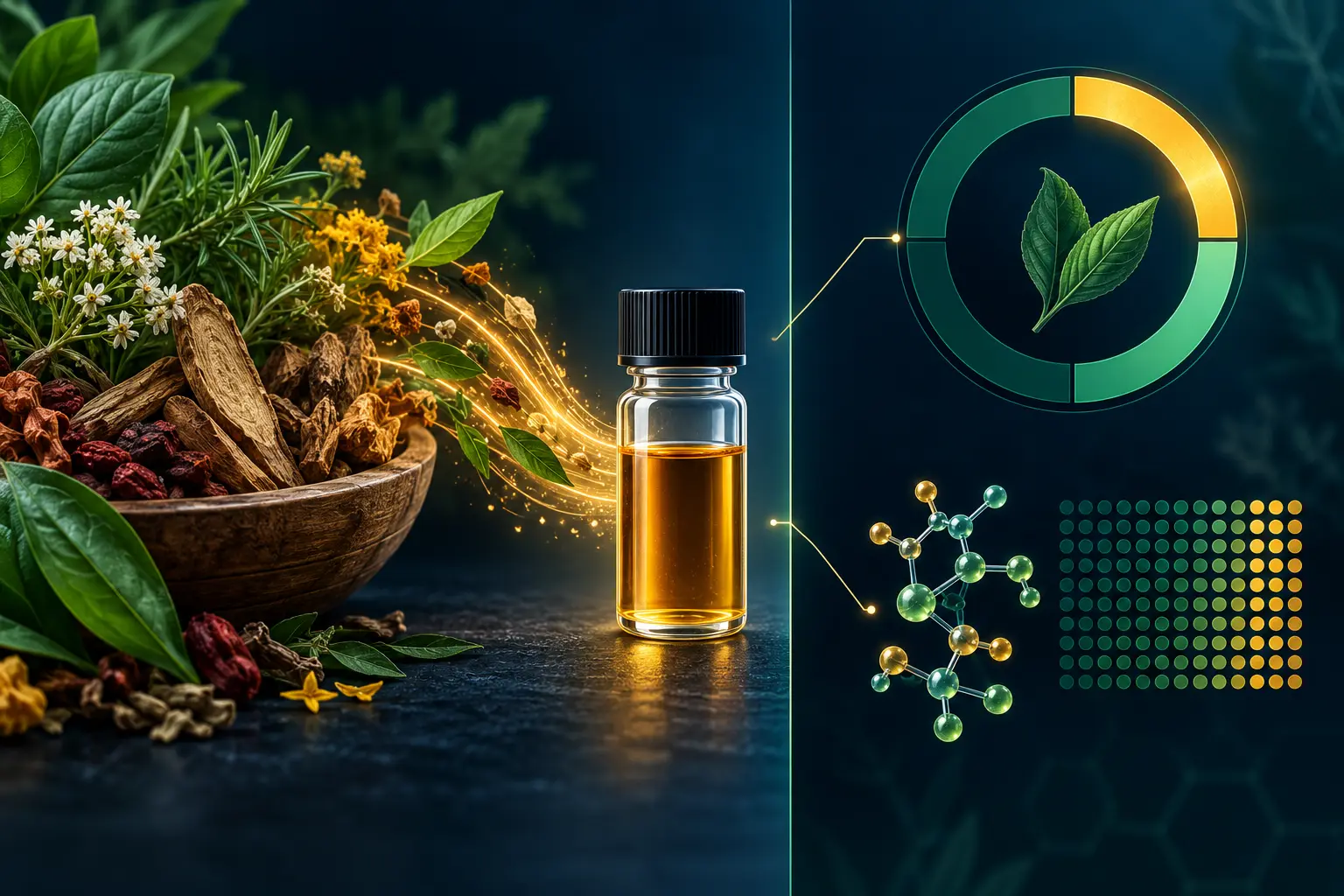
For a dry extract, a 10:1 native extract ratio generally means about ten units of dried starting botanical material were used to produce one unit of native extract. It describes manufacturing yield, not ten times the amount of every active compound.
Ratios may be presented as ranges because starting material and extractable matter vary. Finished extracts can also contain carriers, so the native extract ratio and the ratio of plant material to finished extract may differ. Without that distinction, two apparently equal ratios may not be comparable.
What a constituent percentage means
A percentage states the share of a named compound or compound group in the measured extract. Five hundred milligrams standardized to 20% of a constituent yields a calculated 100 mg per serving. The number applies only to the named constituent.
Total polyphenols, total catechins, and EGCG are nested but different measures. A total-group percentage cannot be treated as the percentage of one member. Caffeine also requires separate disclosure.
Worked comparison: the bigger ratio can deliver less
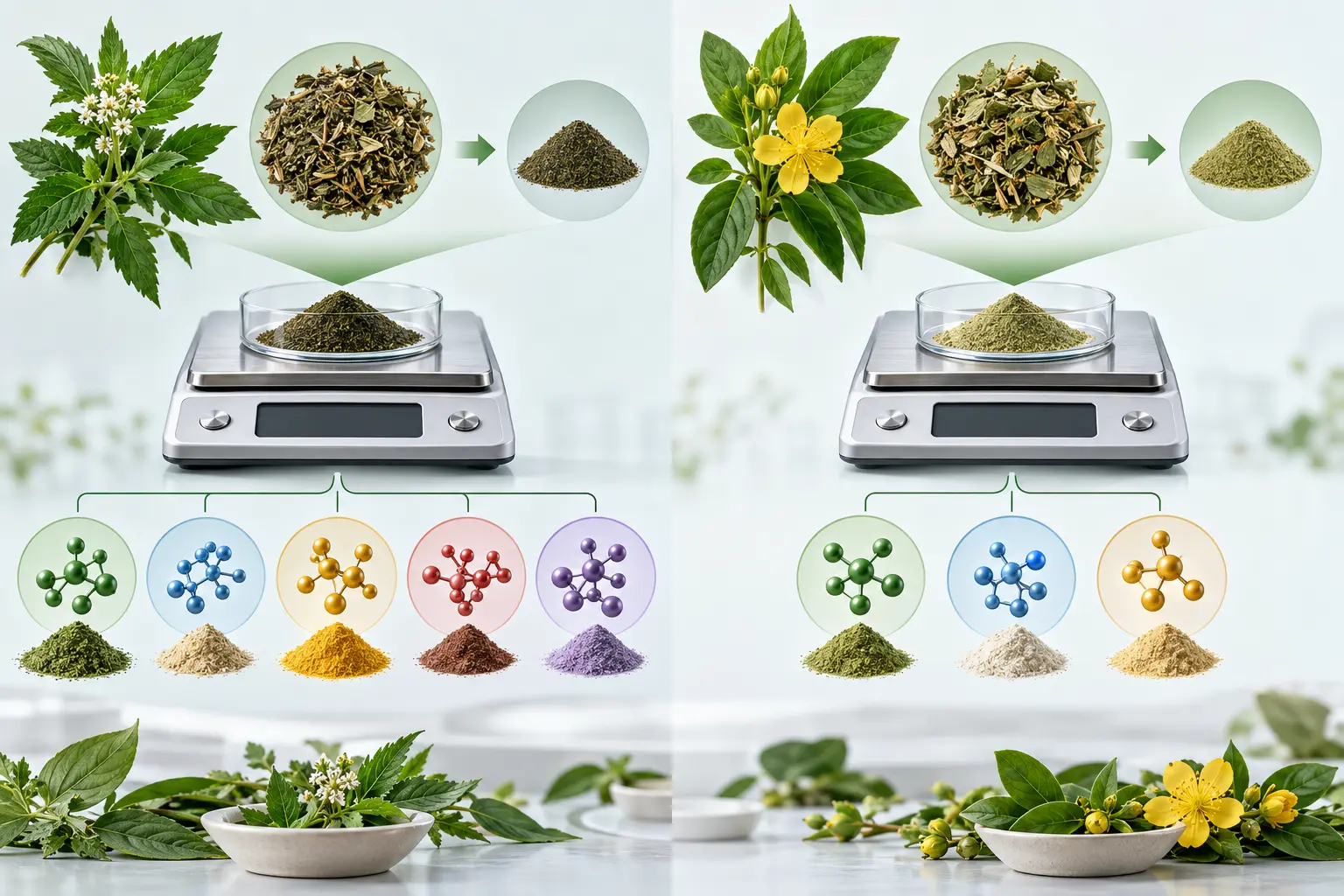
Product A supplies 300 mg of a 10:1 extract standardized to 5% compound X: 15 mg of X. Product B supplies 200 mg of a 4:1 extract standardized to 20% X: 40 mg of X. Product A uses the larger plant-to-extract ratio, while Product B discloses the larger X dose.
Neither wins automatically. The relevant human study may use a different extract matrix, and compound X may be a marker rather than the sole active. Safety, purity, solvent, excipients, and finished-product testing still matter.
Four calculations not to make
- Do not call a 20:1 extract twenty times clinically stronger.
- Do not treat raw-herb equivalent as the physical extract mass in the capsule.
- Do not assume a high percentage proves purity of the whole product.
- Do not combine ratio and percentage into an invented efficacy score.
When a retailer displays only a dramatic “equivalent” number, check the Supplement Facts panel and ask for the native extract amount and specification.
How this applies to Fat Burn Active
A standardization such as 40% EGCG or 22% caffeine is not an extract ratio. Without the extract mass, Fat Burn Active's constituent milligrams remain unknown.
Fat Burn Active is relevant here because its official listing identifies standardized plant extracts, caffeine sources, vitamins, and zinc in one formula. First read our independent review. If the formula, stimulant profile, evidence limits, and warnings fit your situation, check the current Fat Burn Active price on the official website. We may receive a commission at no additional cost.
Frequently asked questions
Is 20:1 twice as strong as 10:1?
Not necessarily. Ratios describe material yield and do not establish active dose or clinical potency.
Can I calculate active milligrams from a ratio?
No. You need extract mass and the named constituent percentage or a direct milligram value.
What is raw-herb equivalent?
It estimates starting botanical material represented by an extract; it is not necessarily the mass inside the capsule.
Sources
- Understanding Plant-to-Extract Ratios
- NIH ODS: Botanical Supplement Background
- FDA Dietary Supplement Labeling Guide
- NIH Dietary Supplement Label Database
Sources reviewed September 8, 2026. This article is general educational information, not medical advice, diagnosis, or treatment.