Prebiotic is a functional definition, not a marketing synonym
A prebiotic must be selectively used by host microorganisms and confer a health benefit. Fermentability alone is not enough, and “feeds good bacteria” is too broad to verify a product claim. Inulin-type fructans, fructooligosaccharides, galactooligosaccharides, and some resistant starches are studied examples, but they differ in structure, fermentation pattern, dose, and tolerance.
Probiotics are live microorganisms, while prebiotics are substrates. A synbiotic combines the two with a rationale for working together. Evidence for a probiotic strain cannot validate a prebiotic powder, and a study of one inulin preparation cannot establish a category-wide dose.
What the body-weight evidence can and cannot show
Systematic reviews combine trials that differ substantially. Some report small improvements in BMI, waist, appetite, glucose markers, or inflammatory measures, while individual outcomes and subgroups are inconsistent. A pooled average does not identify which person will respond or prove that every commercial blend works.
Mechanisms under study include fermentation products, gut-barrier signaling, bile acids, glucose responses, and appetite hormones. These pathways can explain why research is reasonable; they do not establish clinically meaningful fat loss. Look for an actual difference from placebo in weight or waist, not only a microbiome chart or short post-meal hormone change.
Match the exact carbohydrate and daily amount
Count grams per maximum day, not capsule count. If a trial uses grams and the product hides the blend amount, relevance is unknown. Tiny decorative quantities should not inherit results from stand-alone doses.
Use food as the foundation
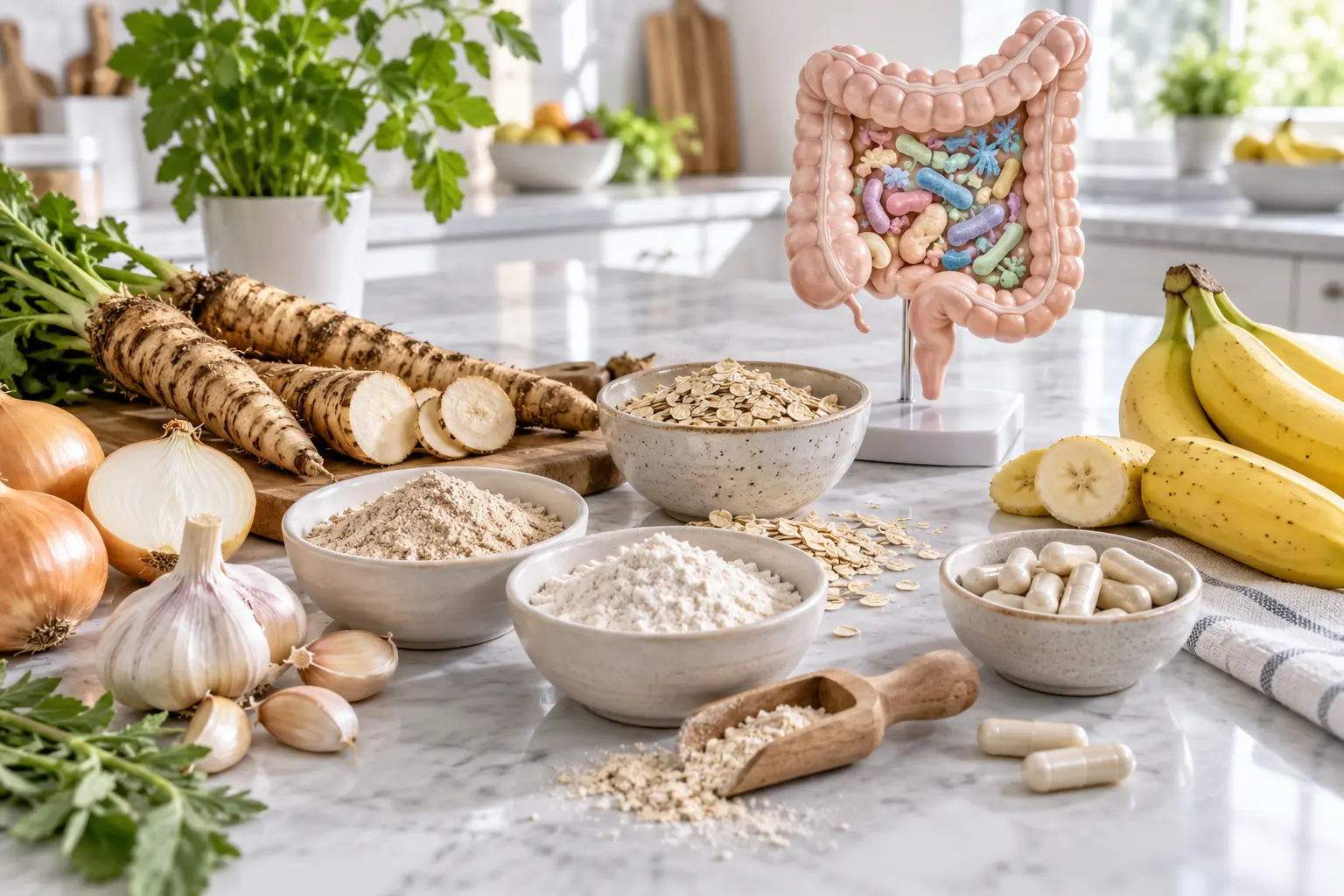
Onions, garlic, leeks, legumes, oats, bananas, cooled starches, and other plant foods can contribute fermentable substrates while also providing nutrients and food structure. No single list suits every digestive condition, and culinary exposure is not identical to a purified trial ingredient.
Increase dietary variety gradually. A practical plate still needs appropriate protein, vegetables or fruit, a carbohydrate source when suitable, and measured energy-dense additions. If prebiotic-rich foods improve meal quality or replace a less satisfying option, that behavioral pathway may matter more than a speculative microbiome effect.
Digestive symptoms are a dose signal, not proof of action
Gas, bloating, cramping, stool changes, and urgency can occur when fermentation rises quickly. Start with a small amount, change one source, keep fluid appropriate, and allow time to assess tolerance. More discomfort does not mean more beneficial fermentation or faster weight loss.
People with significant gastrointestinal disease, severe unexplained symptoms, recent surgery, or a highly restricted diet should obtain individualized advice. If a product worsens intake quality or makes daily life difficult, its theoretical benefit is not practically useful.
Where Fat Burn Active fits
Prebiotic fibers are not identified as the central evidence basis for Fat Burn Active, so prebiotic research should not be transferred to that product.
Fat Burn Active is optional and is not required for fat loss. Evidence for one fiber, botanical, or neurotransmitter pathway cannot establish that a finished multi-ingredient formula produces the same exposure or outcome. Read our independent Fat Burn Active review before deciding.
The official Fat Burn Active page lists a multi-ingredient thermogenic formula, but the buying decision should follow the evidence check above. Compare our independent review, then, if the product remains a reasonable fit, check the current price and label on the official site. We may receive a commission at no additional cost.
Sources
- ISAPP consensus definition of a prebiotic
- Prebiotics in obesity meta-analysis
- Metabolic benefits of dietary prebiotics
- NIDDK: Eating and physical activity
- FDA: Dietary supplements overview
Sources reviewed September 16, 2026. This article is general educational information, not medical advice, diagnosis, or treatment.