Inulin is fermentable, not a gel-forming copy of psyllium
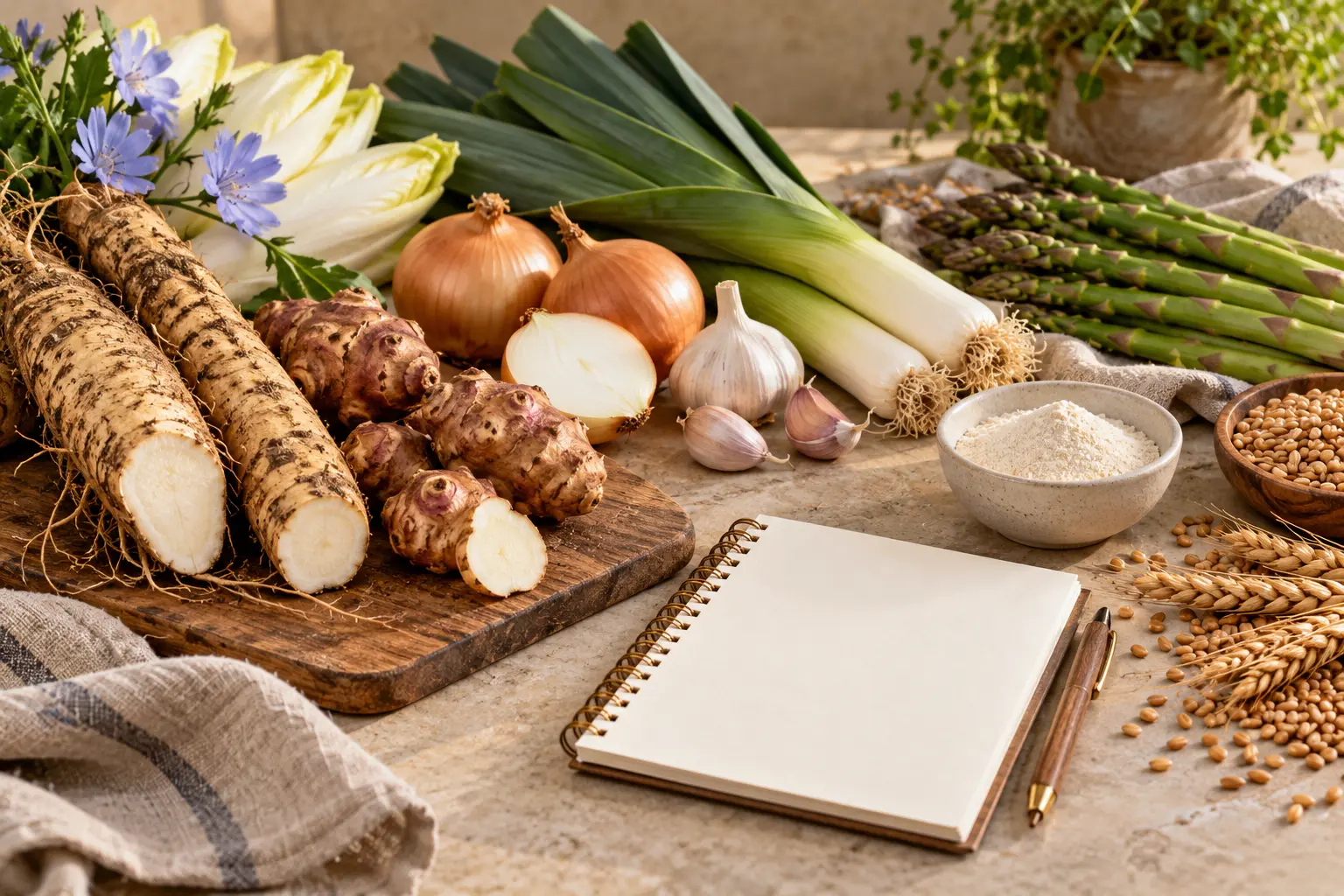
Inulin is a family of fructan carbohydrates that resist digestion in the small intestine and are fermented in the colon. Chicory root is a common commercial source; onions, garlic, leeks, asparagus, Jerusalem artichokes, and wheat contribute varying amounts in food. Chain length and product formulation influence function and tolerance.
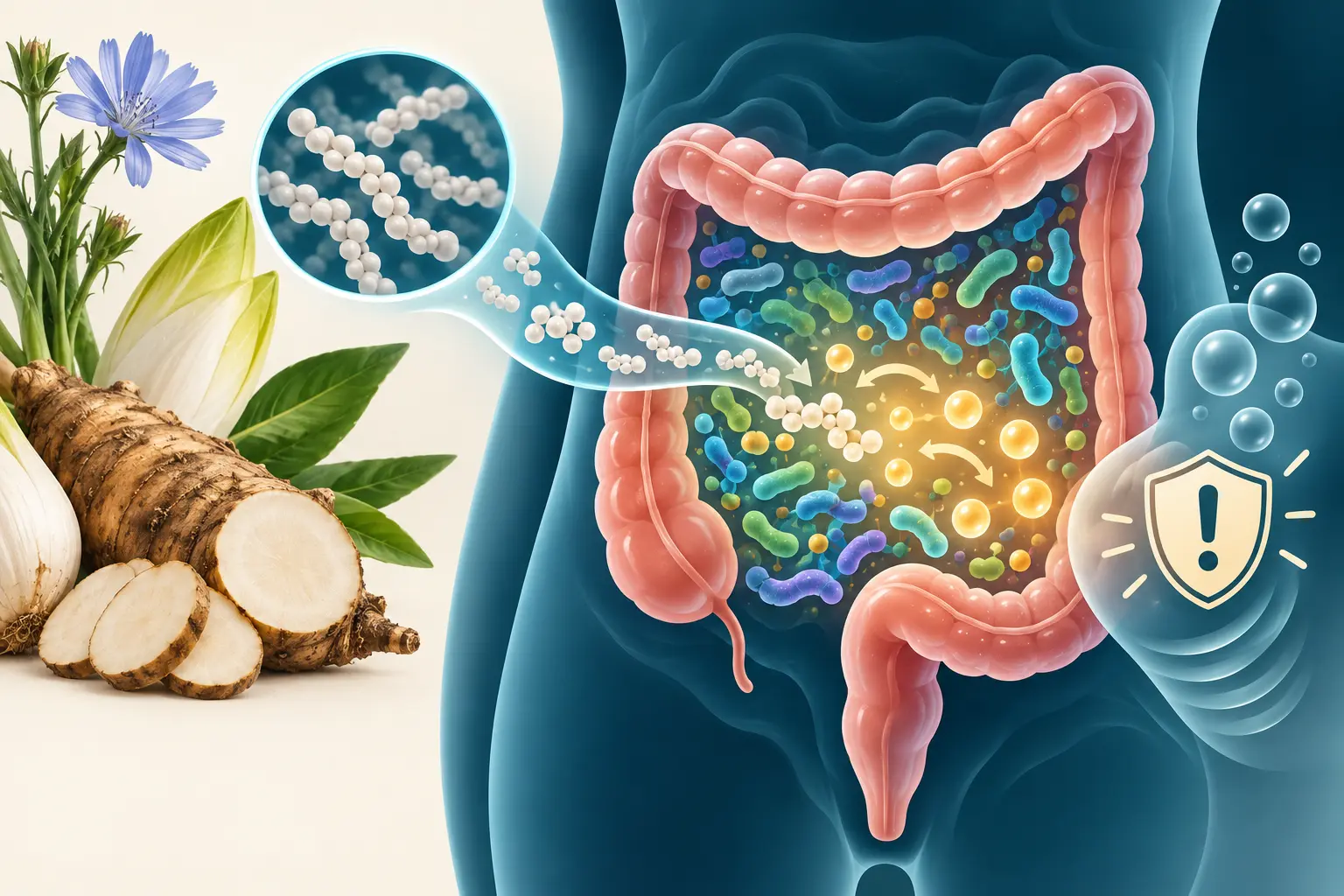
Unlike strongly viscous fibers, inulin's headline property is fermentation. Microbes use it and produce metabolites including short-chain fatty acids. That biological activity is real, but moving a biomarker does not automatically create a meaningful calorie deficit or body-fat change.
What human evidence means
Some trials and pooled analyses report small changes in weight, body mass index, waist, glucose-related measures, or appetite, while others do not. Effects may differ by dose, duration, baseline metabolic health, and whether the intervention uses inulin alone or an inulin-type fructan mixture. Small average changes should not become a universal promise.
Microbiome results are especially easy to overstate. Increasing a bacterial group described as beneficial does not prove that the participant will eat less or lose fat. Patient-centered outcomes, adverse effects, and durability deserve equal attention.
Fermentation can be the benefit and the drawback
Rapid fermentation can cause gas, abdominal pressure, cramps, or altered stools. People with irritable bowel syndrome or sensitivity to fructans may react at amounts others tolerate. A symptom flare is not evidence that harmful organisms are leaving the body.
Check packaged foods before adding a powder. Protein bars, fiber snacks, yogurt, and meal replacements may already contain chicory-root fiber or inulin. Stacking several products can turn a modest planned dose into a large unrecognized exposure.
Run a food-first tolerance ladder
For one week, keep meals stable and record symptoms. Then add one modest food source, such as a small portion of onion or asparagus, if suitable. If using an isolated product, use the lowest labeled amount and do not add other fermentable-fiber products simultaneously.
Track hunger, unplanned eating, stool pattern, pain, and bloating. Increase only after several comfortable days. If symptoms impair sleep, work, or eating, reduce or stop. A product that theoretically helps the microbiome but repeatedly disrupts daily life is not a successful weight-management tool.
Place inulin inside the whole diet
A varied plant diet supplies many fibers and substrates rather than feeding one microbial pathway. Beans, oats, fruit, vegetables, nuts, seeds, and whole grains also contribute meal volume and nutrients. Inulin-fortified cookies do not become equivalent to those foods because the fiber number rises.
If weight is the goal, examine what the inulin-containing food replaces. Swapping a high-calorie snack for a lower-energy, satisfying option may help; adding a prebiotic snack to the existing day may not.
One more decision check
Because baseline diets and microbiomes differ, another person's symptom-free response or scale change cannot predict yours. Use your predefined outcome.
Food sources of inulin
Chicory root, Jerusalem artichoke, garlic, onions, leeks, asparagus and bananas contain inulin. Many processed foods add inulin to increase fiber content, so check labels if you are sensitive.
What studies show
Some studies show modest effects of inulin-type fructans on appetite and weight, but results are inconsistent and effects small. Inulin feeds beneficial gut bacteria, which may have other health benefits. It can cause gas and bloating, especially in people with irritable bowel syndrome.
Where a supplement fits
Inulin is a fiber; a stimulant fat burner works differently. Neither replaces a diet rich in vegetables and whole grains.
A supplement is not required to benefit from this guide. If your foundations are already in place, use the independent Fat Burn Active review to judge whether the formula has a useful optional role. If it fits your expectations and stimulant tolerance, check the current price on the official site. We may receive a commission.
Frequently asked questions
Does inulin help weight loss?
Evidence shows small and inconsistent effects.
How much inulin should I take?
Start with small amounts, 2–3 g a day, and increase slowly.
Is inulin suitable for IBS?
It often worsens symptoms in people with IBS; ask a dietitian.
Sources
- Dietary Fiber and Satiety Review
- National Academies: Dietary Reference Intakes
- Monash University: FODMAPs and IBS
- Dietary Guidelines for Americans
Sources reviewed September 15, 2026. This article is general educational information, not medical advice, diagnosis, or treatment.