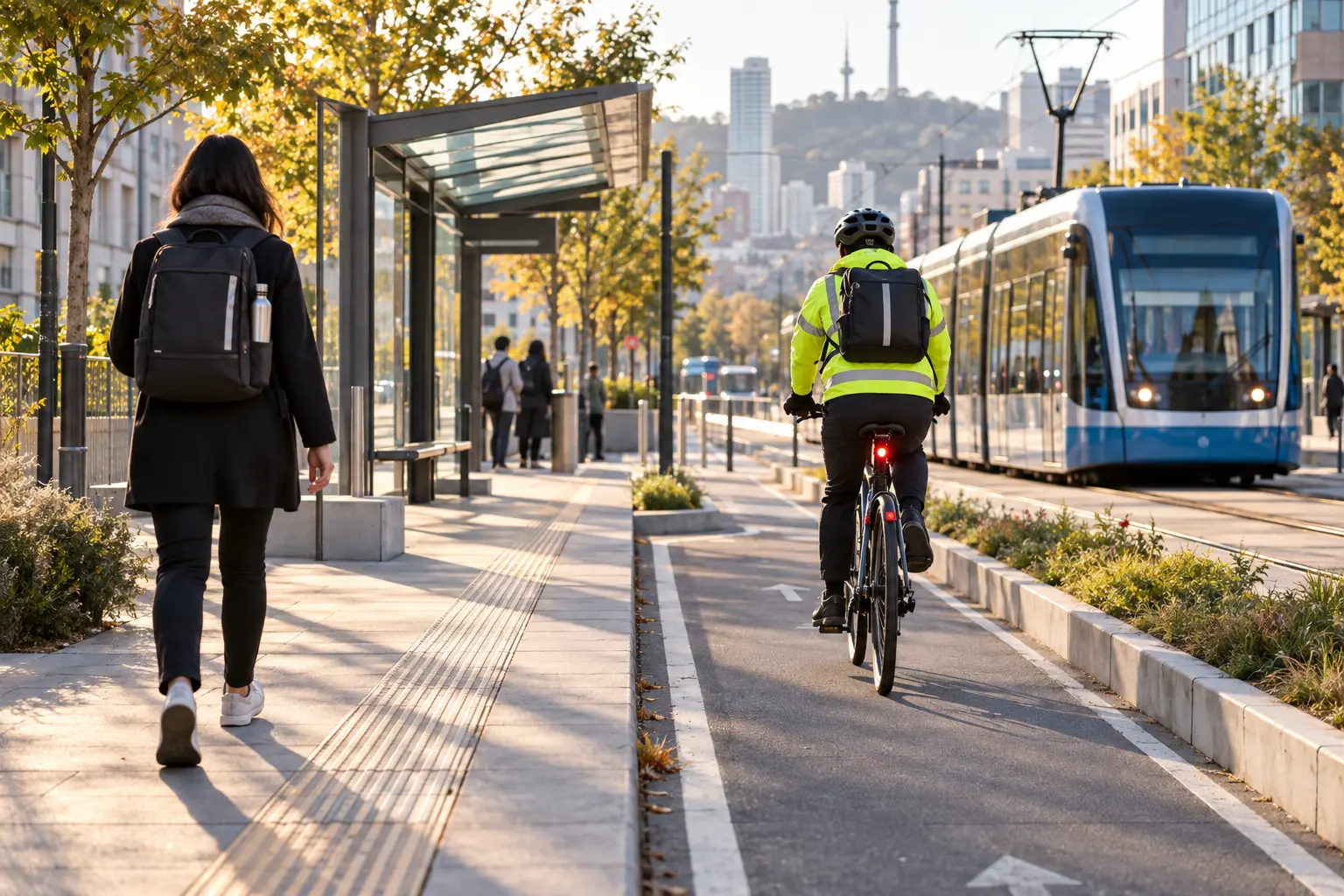
What active-commuting evidence can show
People who walk, cycle, or combine public transport with walking often have lower average body mass or more physical activity than car-only commuters. When adults changed travel mode toward active commuting, cohort analyses reported modest favorable BMI changes. These findings are useful but remain affected by self-selection, neighborhood design, occupation, and income.
The credible conclusion is that commuting can provide a repeatable opportunity for movement. It is not that a particular distance produces a guaranteed kilogram result. Weight change still depends on food intake, total activity, and compensation.
Choose the smallest workable commute change

Run a route-and-friction audit
Map distance, crossings, lighting, surface, traffic speed, bike infrastructure, weather exposure, storage, changing facilities, cost, and schedule reliability. Include the return trip. A route that feels safe at 8 a.m. may be unsuitable after dark.
Prepare shoes, reflective equipment, helmet where appropriate, repair supplies, and a weather fallback. Do not use headphones in a way that blocks traffic awareness. If the route creates repeated pain or unsafe rushing, shorten it.
Progress commuting without draining the week
Begin once or twice weekly. Hold distance stable until legs, feet, schedule, and sleep adapt. Add frequency before speed, especially if the commute precedes physical work or training. Keep an emergency transport option.
Check whether the new commute reduces later steps or makes evening eating harder to manage. A balanced meal plan and adequate recovery protect the routine better than treating travel as calorie repayment.
Personalize the routine
Test the backup route before it is needed. Know where you can safely shorten the active segment, board transit, secure a bicycle, or arrange transport if weather, symptoms, or overtime changes the journey. Reliability is part of adherence.
How much an active commute adds
A 20-minute brisk walk each way adds about 200 minutes of moderate activity a week, more than the 150-minute guideline on its own. Cycling at a moderate pace uses more energy per minute than walking. Over months, this regular movement can make a meaningful difference to fitness and weight maintenance, especially if it replaces sitting rather than other exercise.
Staying safe on the way
Choose routes with lower traffic speeds, good lighting and dedicated paths where possible. Wear visible clothing, use lights on a bike after dark and wear a helmet where recommended. Plan for bad weather with a public transport backup.
Where a supplement fits
An active commute is real exercise. No supplement adds meaningfully to it.
A supplement is not required to benefit from this guide. If your foundations are already in place, use the independent Fat Burn Active review to judge whether the formula has a useful optional role. If it fits your expectations and stimulant tolerance, check the current price on the official site. We may receive a commission.
Frequently asked questions
Does a short walk to the station count?
Yes. Short bouts of walking count toward weekly activity guidelines.
Should I eat more because I commute actively?
Only if you are hungrier or losing weight faster than intended; let the weekly trend guide you.
Does it have to be brisk?
A brisk pace adds more fitness benefit, but any walking or cycling replaces sitting.
What if the weather is bad?
Keep a transport backup and use an indoor alternative that day.
Sources
- Change in Commute Mode and BMI
- WHO Physical Activity Guidelines
- US Physical Activity Guidelines
- CDC Transportation Health Impact Assessment
- Compendium of Physical Activities
Sources reviewed September 15, 2026. This article is general educational information, not medical advice, diagnosis, or treatment.