
What capsaicin actually does
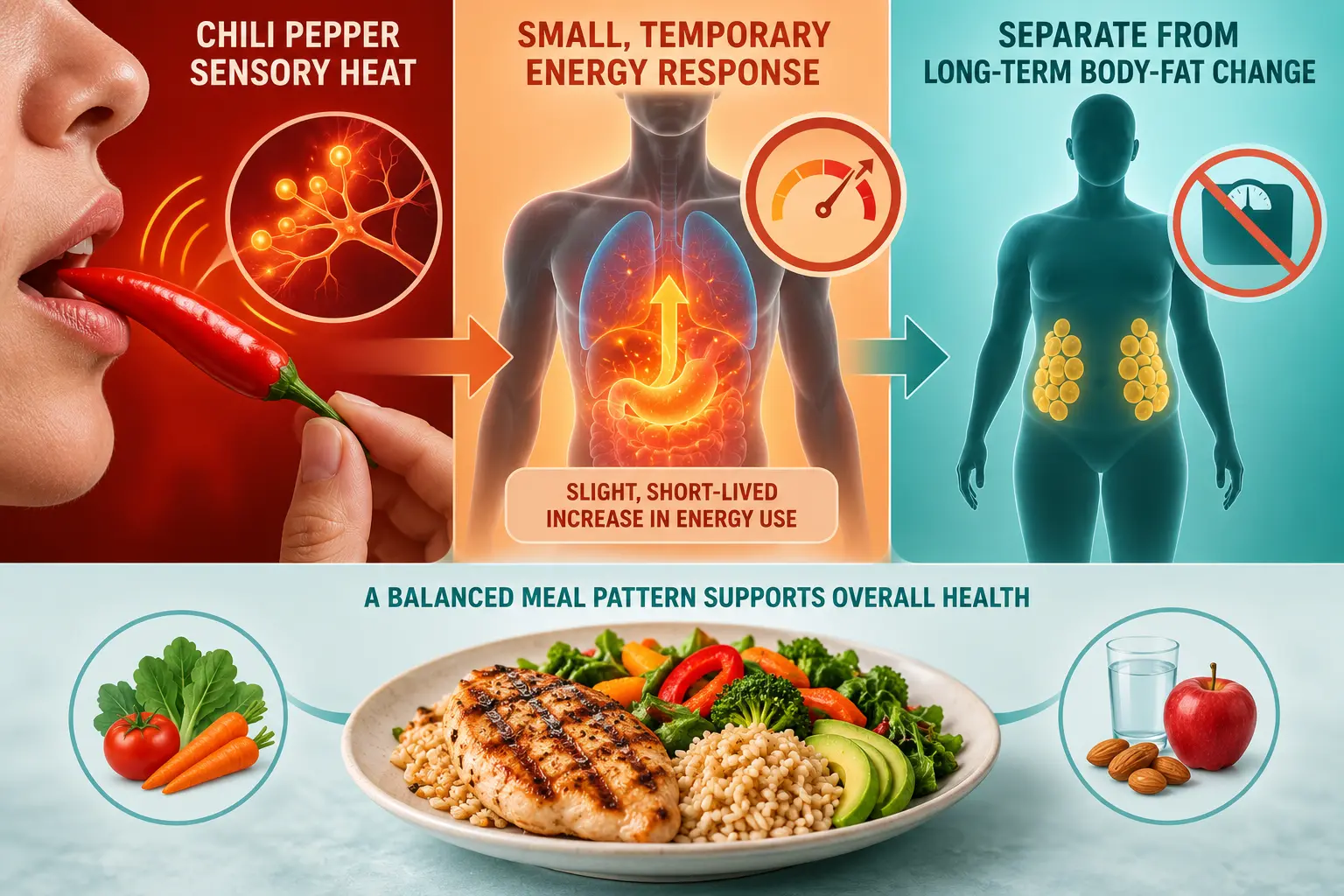
Capsaicin is the pungent compound associated with chili peppers. It activates TRPV1 sensory pathways involved in heat and pain perception. Researchers have studied whether this signaling influences sympathetic activity, expenditure, substrate oxidation, and appetite.
Capsiate and capsinoids are related non-pungent compounds, while phenylcapsaicin is another preparation used in supplements. They are not interchangeable. A study of one compound and dose does not prove the effect of a restaurant curry or another extract.
The metabolic effect is usually small
Reviews suggest capsaicin or capsiate can influence expenditure and fat oxidation under some conditions, especially at higher studied doses, but the magnitude is small. Studies vary in participants, habituation, meals, dose, duration, and measurement.
An acute shift toward fat oxidation does not equal net body-fat loss. Fat use and storage later still depend on energy balance across the whole day and week.
Appetite may matter more than heat
Some people report greater fullness or lower desire to eat after spicy food; others compensate, add caloric drinks, or choose rich sauces to manage the heat. Familiarity with chili may change the response. A small appetite effect is useful only when it improves actual intake without discomfort.
Track the complete meal and later hunger rather than assuming spice automatically makes a meal lighter.
Use spice to improve the meal
Chili, paprika, pepper, ginger, garlic, herbs, acidity, and aromatics can make vegetables, legumes, lean proteins, and soups more appealing. That can improve adherence through flavor variety without relying on large amounts of oil, sugar, or creamy sauce.
Start with a comfortable level. More burning is not more effective. The best dose is culinary and personally tolerable, not the maximum discomfort someone can endure.
Know when spicy food is the wrong tool
Spicy food can worsen burning, reflux, abdominal pain, or bowel symptoms in susceptible people. Individual triggers differ. Stop forcing it if symptoms occur, and seek medical advice for persistent pain, swallowing difficulty, vomiting, bleeding, unexplained weight loss, or other concerning symptoms.
A concentrated supplement has a different exposure and safety question from ordinary food. “Natural chili” does not make every extract harmless.
A three-meal spice-response card
For three comparable meals, record the chili form and amount, meal ingredients, hunger before eating, fullness afterward, gastrointestinal comfort, drinks consumed, and hunger three hours later. If spice helps a balanced meal feel complete without symptoms, it has a useful job even if no metabolic effect can be detected.
If it leads to creamy additions, sugary drinks, reflux, or avoidance, reduce it. Do not credit short-term scale change to capsaicin; sodium, carbohydrate, food mass, and fluid produce much larger noise.
Turn the mechanism into a useful decision
Keep culinary food and concentrated products in separate evidence rows. For food, record the type of chili, approximate serving, complete meal, and whether it replaces or merely accompanies an energy-dense sauce. For a capsule, record the exact compound, standardized amount, daily exposure, other stimulants, and warnings. A person may comfortably eat chili while reacting poorly to a concentrated preparation, or dislike pungent food while tolerating a non-pungent compound. Neither experience proves weight loss.
Also distinguish novelty from a durable habit. A spicy meal may temporarily slow eating or feel more satisfying because it is unusual. If the effect disappears after repeated exposure, annual calculations based on the first meal become misleading. The useful question is whether the food keeps helping the eating pattern after several ordinary weeks, without reflux, pain, or compensatory drinks.
Where a supplement fits
Fat Burn Active contains capsaicinoid ingredients. Like spicy food, their effect on energy use is small and the finished product has not been tested for fat loss.
Once the practical steps in this guide are working, decide whether an optional supplement adds enough value. Start with the Fat Burn Active review; if the formula and limitations are acceptable, see the current price on the official site. We may receive a commission.
Frequently asked questions
Does spicy food burn fat?
Capsaicin can raise energy use slightly for a short time, usually by tens of calories.
Can chili reduce appetite?
Some studies show a small reduction in appetite, but results vary.
Are capsaicin supplements worth it?
Evidence for meaningful weight loss is weak, and they can cause stomach upset.
Sources
- Capsaicin and Capsiate Energy-Balance Review
- Capsaicinoids for Weight Management
- Capsaicin Weight-Loss Meta-Analysis
- NIH ODS: Weight-Loss Supplements
Sources reviewed September 14, 2026. This article is general educational information, not medical advice, diagnosis, or treatment.