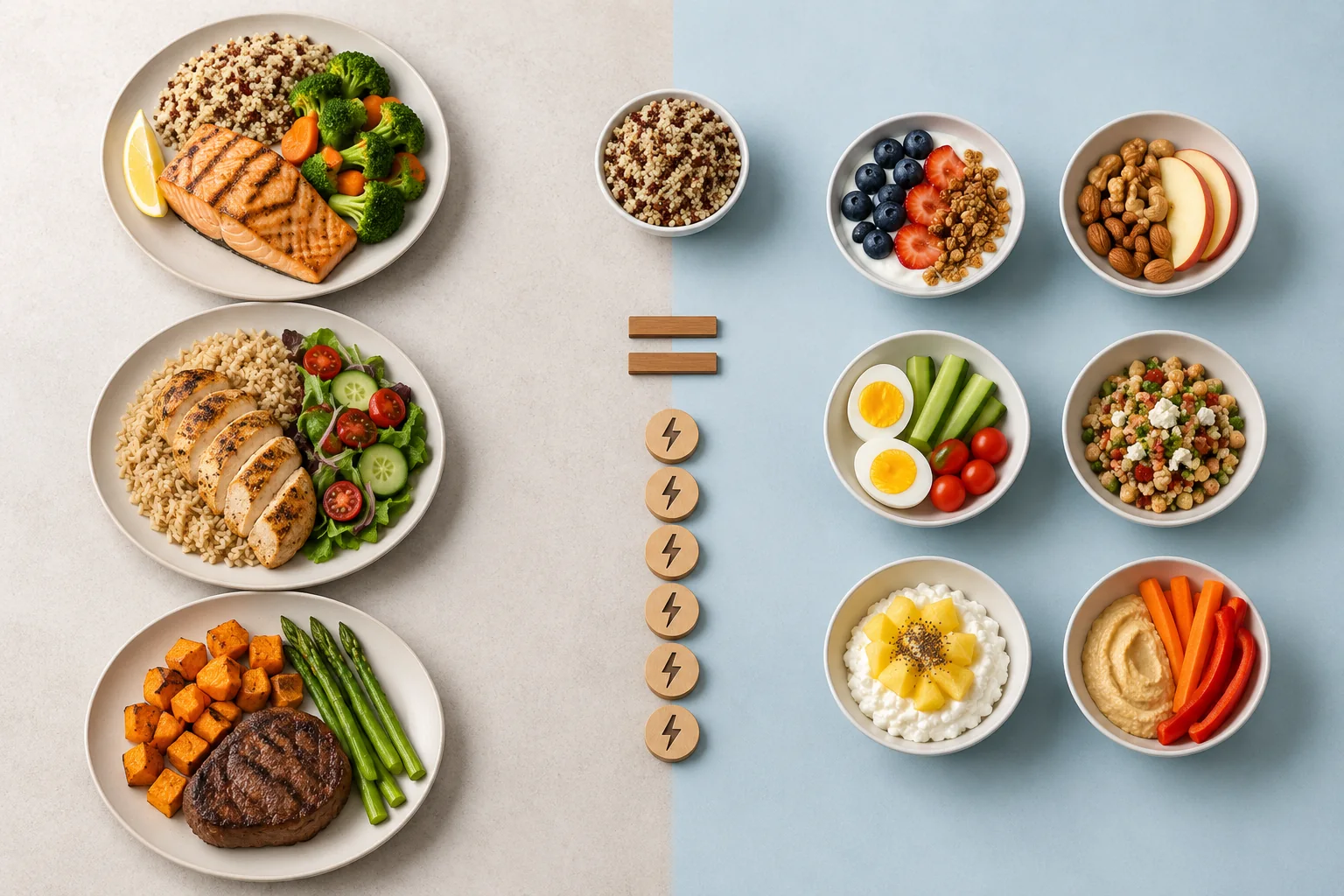
Why the furnace analogy fails
If a day's food creates a certain thermic cost, splitting it into six portions usually creates six smaller rises rather than a larger total fire. Eating every two hours does not prevent metabolism from shutting down because it was never switching off between meals.
Likewise, one or two meals do not automatically cause starvation mode. Longer fasting patterns can affect hunger, glucose and performance differently, but fat loss still depends strongly on sustainable energy balance.
What controlled comparisons find
Reviews of meal-frequency research generally find no consistent metabolic or weight-loss advantage for higher frequency when total intake is controlled. Many studies are short, small or depend on self-reported intake. The useful conclusion is flexibility, not that frequency never affects anyone.
Meal frequency can change appetite and convenience. A six-meal plan fails if every “small” meal grows; a three-meal plan fails if long gaps trigger loss-of-control eating.

Match frequency to the problem
Test two patterns fairly
Compare two weeks with three meals against two weeks with three meals plus one planned snack, using similar total food and sleep. Record hunger before meals, satisfaction, unplanned bites, digestion, training and adherence. Do not compare six tiny diet meals with three unrestricted restaurant meals and attribute the result to frequency alone.
Keep the pattern that reduces decisions and makes nutrition easier. There is no prize for eating most often.
The thermic effect of food explained
Digesting food uses energy, roughly 10% of the calories eaten. Because this is proportional to the total amount eaten, six small meals and three larger meals with the same total calories produce about the same thermic effect over the day. Controlled studies in metabolic chambers have confirmed that meal frequency, at equal calories, does not meaningfully change daily energy expenditure.
Which pattern works better in practice
For some people, smaller frequent meals help control hunger and prevent overeating at dinner. For others, frequent eating creates more chances to overeat and makes portions harder to track. People with diabetes on certain medicines, athletes and those with digestive conditions may have specific needs. Choose the pattern that keeps hunger manageable and fits your day.
Where a supplement fits
Neither meal frequency nor a supplement changes metabolism in a meaningful way. Total intake and activity are what drive weight change.
A supplement serving schedule should follow its label and safety constraints, not the myth that constant eating accelerates metabolism. Fat Burn Active is optional. Its current official page lists at least 120 mg caffeine per serving from caffeine anhydrous and guarana, unquantified additional green-tea caffeine, and bitter-orange extract standardized to 6 mg synephrine. Feeling warmer or more alert is not a measurement of resting metabolism or long-term fat loss.
Once the practical steps in this guide are working, decide whether an optional supplement adds enough value. Start with the Fat Burn Active review; if the formula and limitations are acceptable, see the current price on the official site. We may receive a commission.
Frequently asked questions
Will eating every three hours boost my metabolism?
No. At the same total calories, meal frequency has little effect on energy expenditure.
Is skipping breakfast bad for weight loss?
Not necessarily. Trials show similar weight outcomes; choose what suits your hunger and schedule.
Are snacks good or bad?
Planned snacks with protein or fiber can help; unplanned grazing usually adds calories.
Sources
- Meal frequency and energy balance review
- Meal frequency and weight loss trial
- NIDDK: Treatment for Overweight and Obesity
- NIH ODS: Weight-Loss Supplements
Sources reviewed September 13, 2026. This article is general educational information, not medical advice, diagnosis, or treatment.