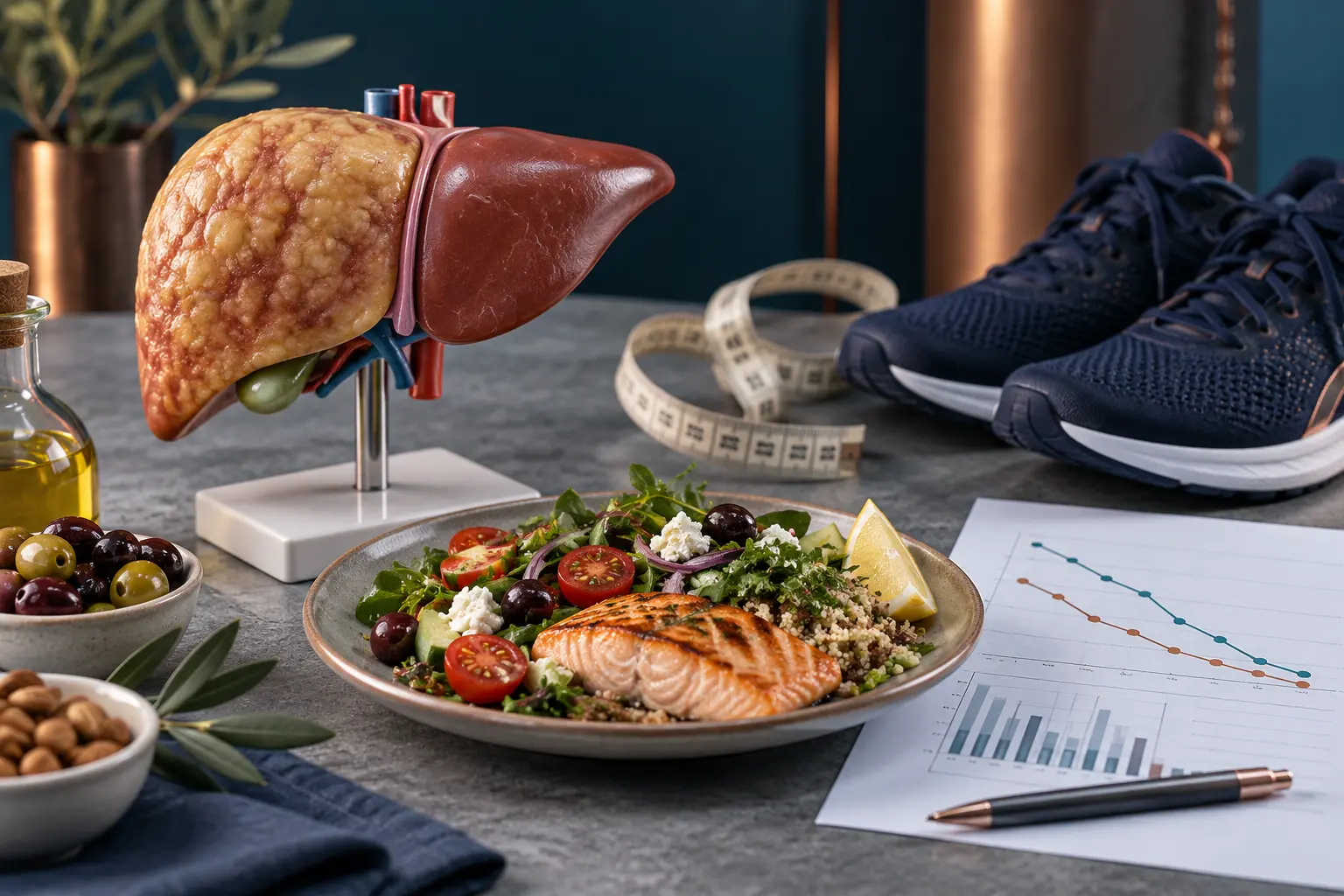
Fat in the liver is a risk signal
MASLD is linked with insulin resistance, type 2 diabetes, abnormal lipids, high blood pressure, and higher body weight, but it can occur without obesity. Liver enzymes may be normal despite disease. The clinical question is not only whether fat is present, but whether inflammation or fibrosis raises future risk.
Find the risk level first
Clinicians combine history, blood tests, imaging, and noninvasive fibrosis scores or elastography when appropriate. Rapid unexplained weight loss, jaundice, abdominal swelling, vomiting blood, black stools, or confusion require urgent care. Symptoms alone cannot stage liver disease.
Create liver-relevant changes
A Mediterranean-style pattern rich in vegetables, legumes, whole grains, nuts, fish, and unsaturated fats is a practical model, not a mandatory menu. Reduce sugary drinks, excess refined foods, and portions that drive persistent surplus. Both aerobic and resistance exercise can improve metabolic health even when the scale changes slowly.
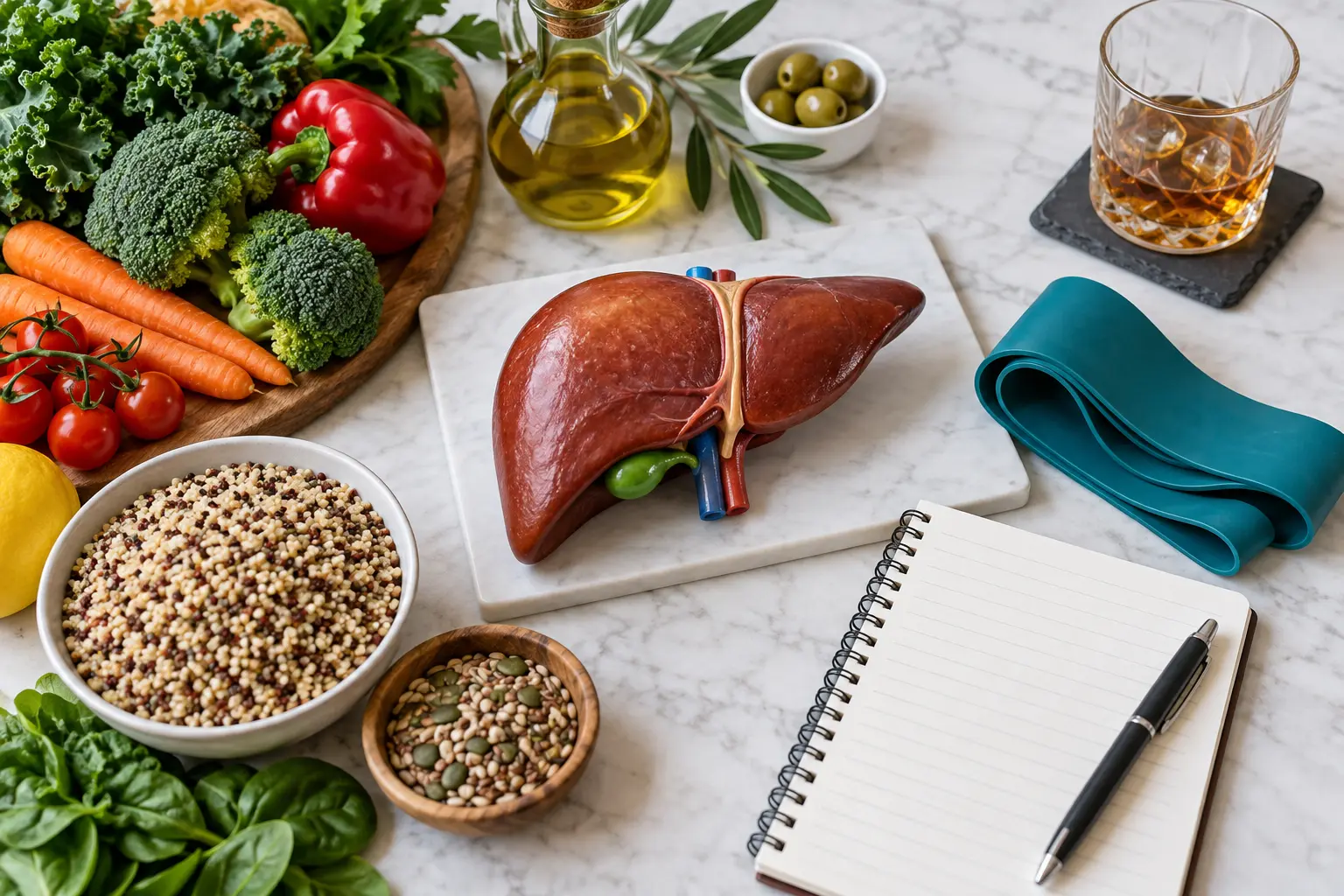
Review alcohol and supplements
Alcohol can add liver injury and calories, and recommendations depend on disease severity, use pattern, medicines, and other conditions. Discuss an appropriate limit or abstinence with the treating professional. Products marketed as liver cleanses can cause liver injury and should not replace evaluation.
How much weight loss helps
Clinical guidance suggests that losing around 5% of body weight can reduce liver fat, 7–10% can reduce liver inflammation, and 10% or more may improve fibrosis in some people. Gradual loss of about 0.5–1 kg a week is preferred, because very rapid weight loss can worsen liver inflammation.
Who is at risk and how it is found
Fatty liver disease linked to metabolic health, now called MASLD, is common in people with obesity, type 2 diabetes, high blood pressure or abnormal cholesterol. It often causes no symptoms and is found through blood tests or an ultrasound done for another reason. Doctors may use a simple score such as FIB-4, based on age and routine blood tests, and sometimes a specialized scan called elastography to estimate liver scarring.
Detox products and other claims
Liver "detox" teas and supplements have no proven benefit for fatty liver, and some herbal products have caused liver injury. Observational studies link regular coffee drinking with lower liver risk, but coffee is not a treatment. The approaches with evidence are weight loss, regular activity, limiting alcohol and managing diabetes and cholesterol.
Frequently asked questions
How much weight loss helps?
Benefits can begin with modest loss, while larger sustained changes may bring greater improvement.
Can exercise help without weight loss?
Yes, activity can improve fitness and metabolic health and may reduce liver fat.
Is a liver detox useful?
No cleanse removes liver fat or replaces evidence-based care.
Sources
Evidence reviewed September 8, 2026. Educational information only; not medical advice.