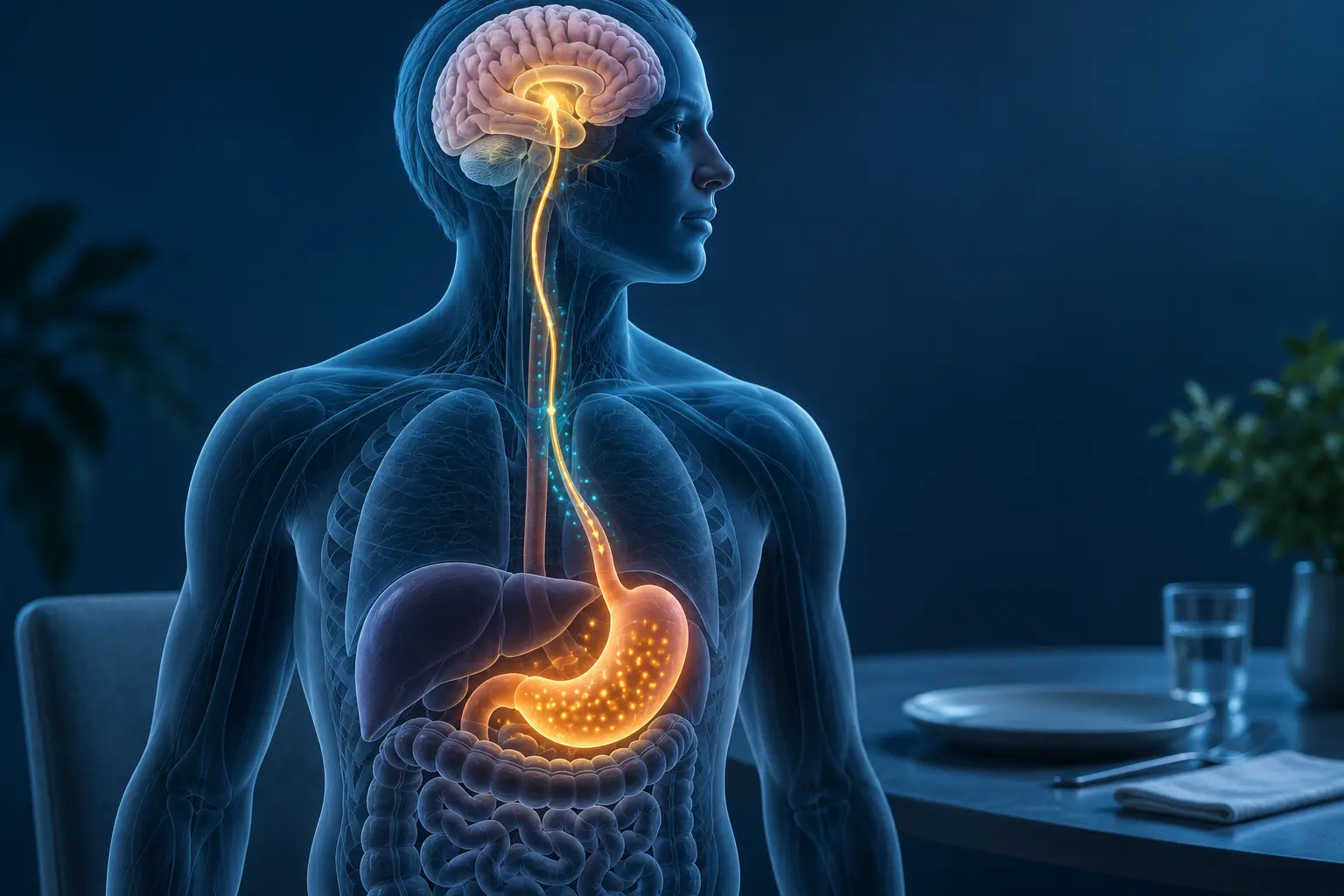
What ghrelin actually does
Acylated ghrelin can activate receptors involved in appetite and growth-hormone release. Meal timing and energy availability influence its pattern, but circulating levels vary and a single measurement is rarely a practical explanation for everyday hunger. People can feel hungry from habit or cues even when one hormone is not known.
After weight loss, appetite-related adaptations may persist and favor regain. This is biology, not a moral failure, but it also does not make regain inevitable. A maintenance system can reduce the number of daily decisions made against strong hunger.
Avoid single-hormone myths
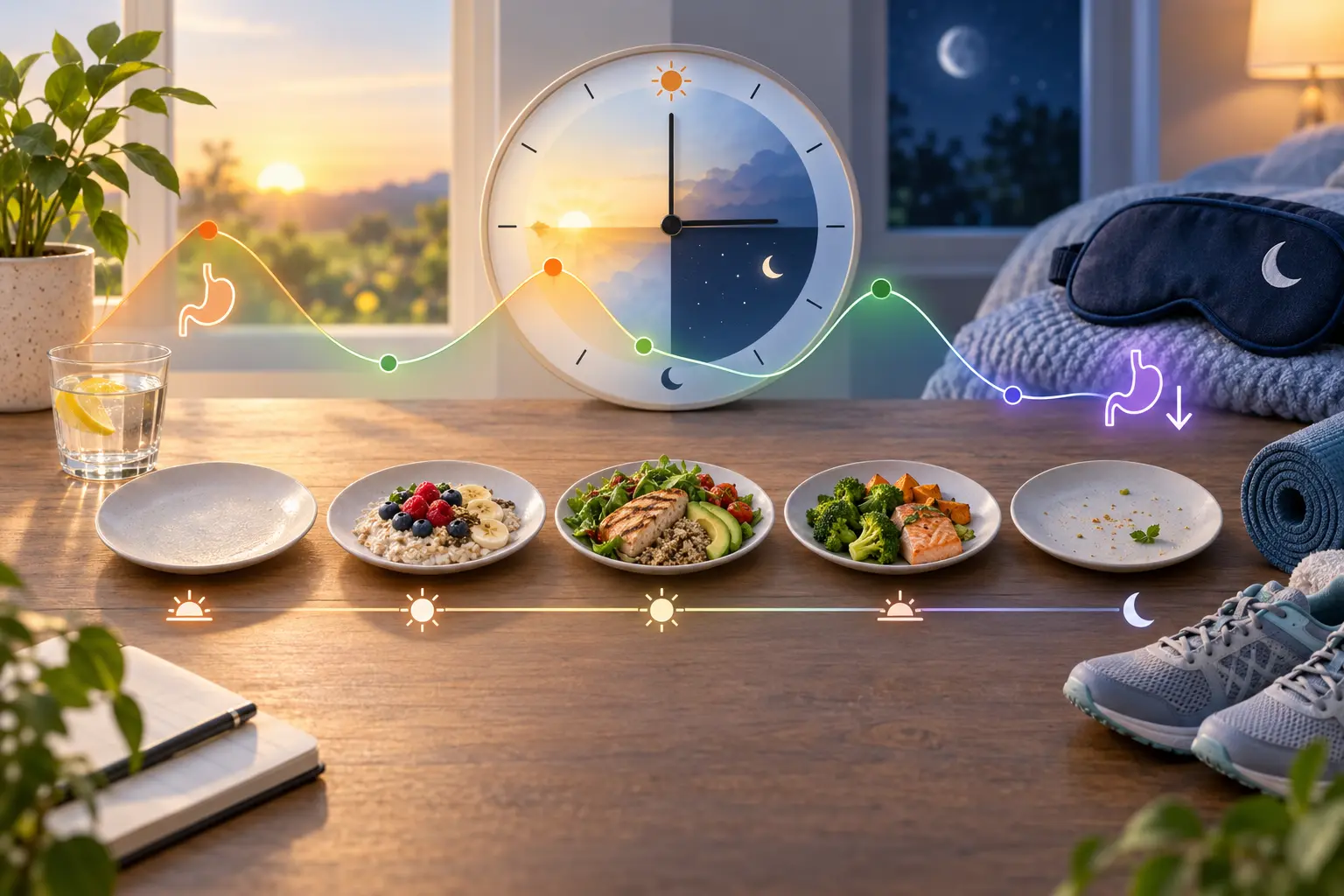
Map hunger across a day
Record wake time, meals, hunger before and two hours after, sleep, exercise, stress, and caffeine. Look for rising hunger before usual meal times, poor satiety after liquid or undersized meals, and evening peaks after restriction. Use the pattern to redesign the day rather than trying to diagnose ghrelin from sensations.
Ghrelin is one of many signals
Ghrelin is produced mainly in the stomach and usually rises before meals and falls after eating. It works alongside other signals: leptin from fat tissue reflects longer-term energy stores, while GLP-1, peptide YY and cholecystokinin from the gut promote fullness after a meal. The brain integrates these with habits, emotions and food cues. No single hormone controls appetite.
Why hunger can rise after weight loss
Studies have found that after significant weight loss, ghrelin can remain higher and fullness hormones lower for at least a year. This helps explain why maintenance often feels harder than the diet itself. It does not make regain inevitable, but it means maintenance needs planned meals, enough protein and fiber, and continued activity rather than willpower alone.
Habits that support appetite regulation
- Regular meals rather than very long gaps followed by large meals.
- Protein at each meal, which tends to suppress ghrelin more than carbohydrate or fat.
- Fiber-rich and water-rich foods that add volume.
- Adequate sleep; short sleep has been linked with higher ghrelin in some studies.
Prescription GLP-1 medicines act on fullness pathways and are an option discussed with a doctor for people who meet medical criteria.
Where a supplement fits
No supplement has been shown to lower ghrelin in a meaningful, lasting way. Meal structure and sleep remain the practical levers.
Treat Fat Burn Active as an optional addition, not a substitute for the steps in this guide. Review its listed ingredients and limitations in our product analysis. If the evidence, warnings, and cost fit your decision, check the current price and formula on the official site. We may earn a commission.
Frequently asked questions
Can I test ghrelin at home?
No useful consumer home test diagnoses the cause of ordinary hunger.
Does ghrelin cause cravings?
It can contribute to hunger, but specific cravings also involve learning, cues, reward, restriction, sleep, and emotion.
Can ghrelin be permanently lowered?
That is not a realistic self-management target; build a sustainable appetite system instead.
Sources
- Endotext: Neurohormonal Control of Appetite
- Peripheral mechanisms in appetite regulation
- Ghrelin and energy balance review
- Persistent hormonal adaptations after weight loss
- Endocrine Society: Ghrelin and Weight Loss
Sources reviewed September 17, 2026. This article is general educational information, not medical advice, diagnosis, or treatment.