Hidden does not mean dishonest
“Hidden calories” are usually hidden from the estimate, not concealed by the person. Oil may remain in a pan, a coffee order may change, and a handful of nuts may grow without attracting attention. Restaurant recipes are unknown, labels permit rounding, databases disagree, and appetite changes. Even careful records are approximations.
The useful question is not whether tracking is perfect. Ask whether a recurring uncertainty could be large enough to close the intended deficit. One unrecorded taste is unlikely to explain a month. A generous pour used twice daily might. Approach the audit as calibration, not confession.
The seven places worth checking first
Use the high-impact audit
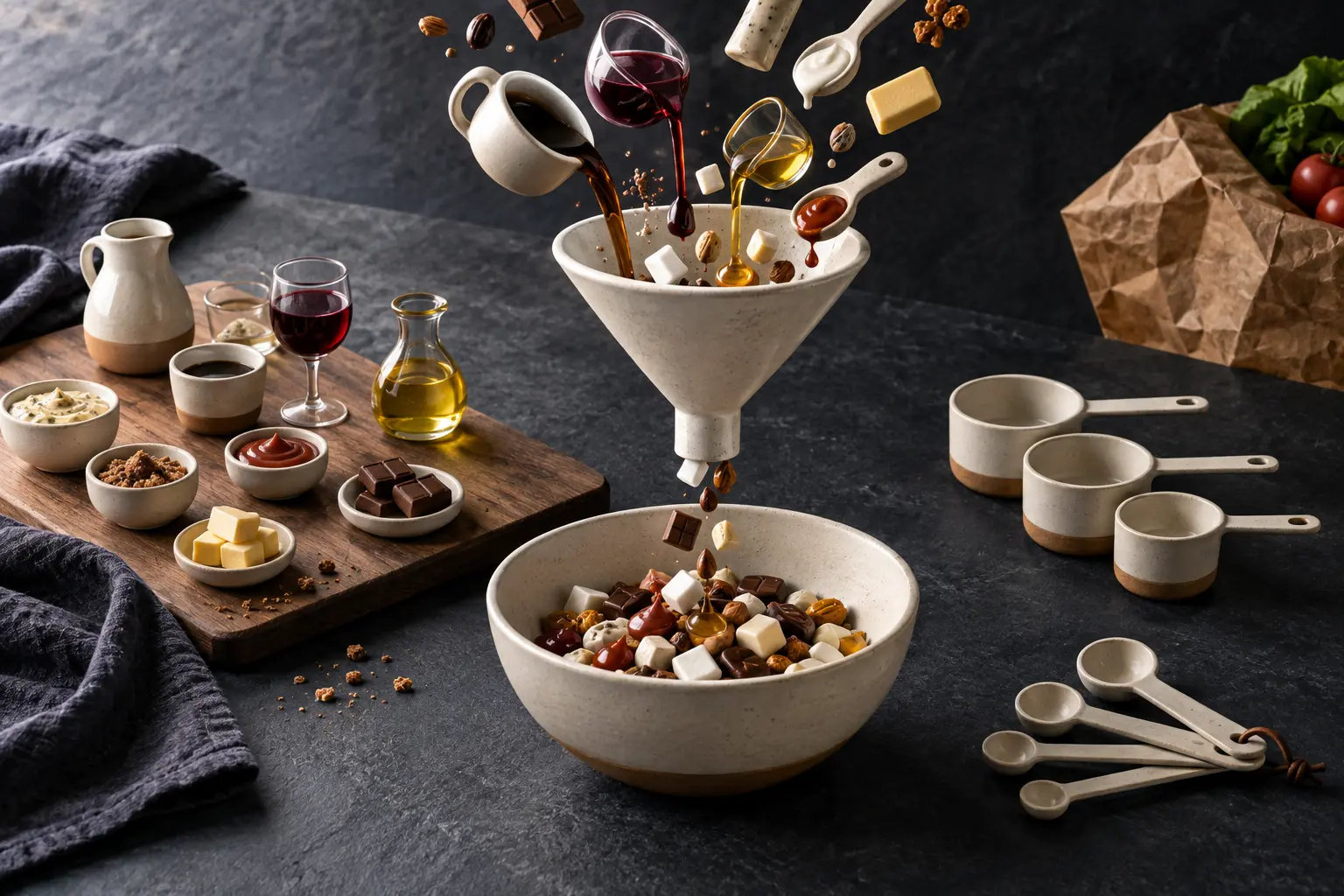
For one week, measure only the items that are calorie-dense, frequent, or uncertain. Weigh the oil container before and after cooking, count the portions produced by a mixed recipe, and photograph unmeasured restaurant meals. Check whether the database entry matches raw or cooked weight. Read both serving size and servings per container.
If numbers are unsuitable, standardize the serving tool: one spoon for dressing, one bowl for cereal, one glass for a caloric drink. Consistency can reveal the trend without permanent counting.
Example: the salad was not the problem
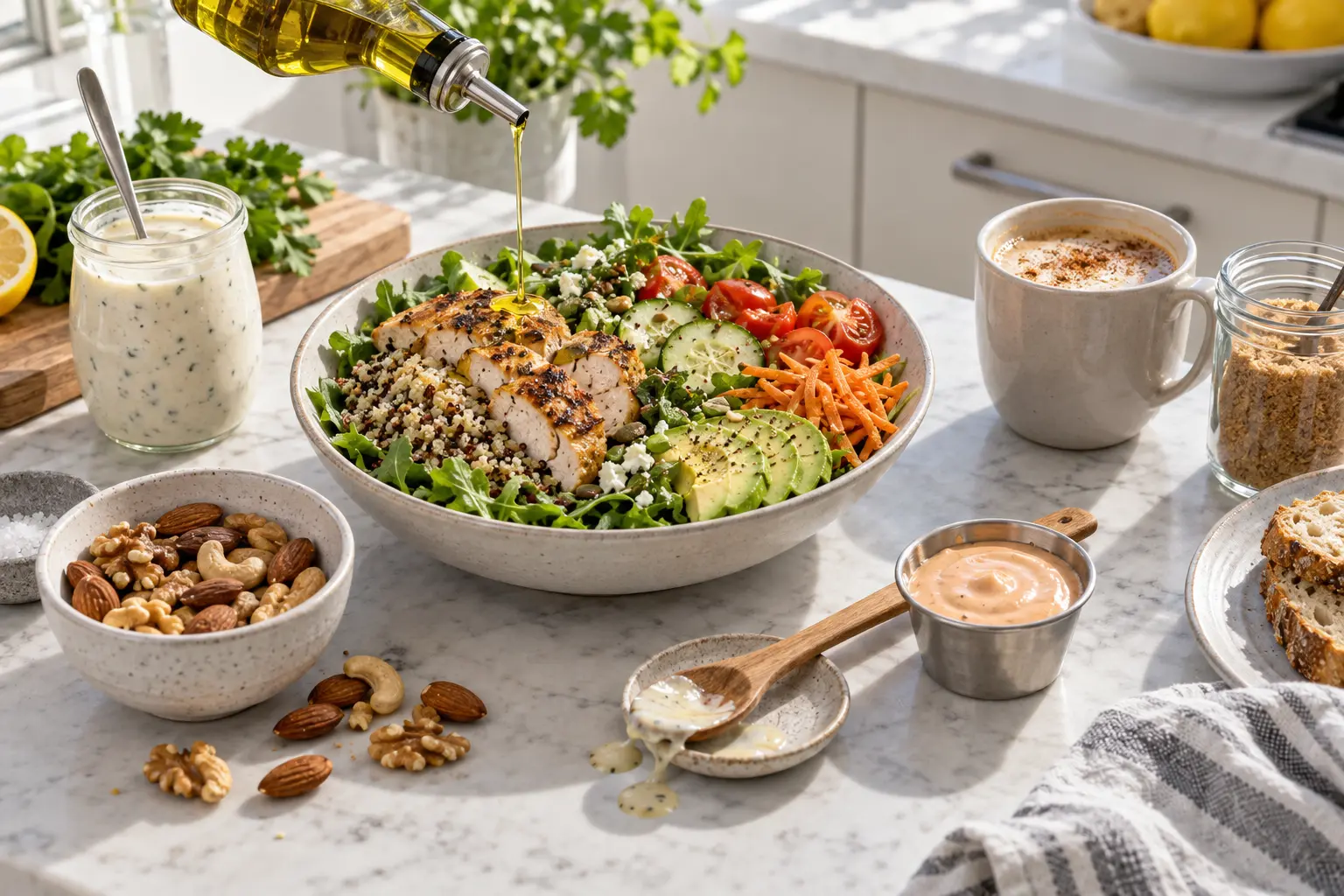
A person eats a large chicken salad for lunch and assumes the vegetables explain the stall. A focused audit shows that the meal changed gradually: an unmeasured oil pour, two spoonfuls of dressing, a larger nut topping, and a sweetened coffee. The vegetables still provide useful volume and fiber. The correction is to standardize the energy-dense additions, not replace lunch with a tiny meal.
After making that one repair, keep food, steps, and training steady for two to four weeks. If the average trend remains flat, return to the broader four-week plateau audit rather than assuming more omissions.
Avoid the accuracy trap
Nutrition labels, restaurant listings, activity devices, and food databases all contain error. Chasing exactness can create anxiety while doing little to improve the decision. Use the same reliable entries, measure the main uncertainties, and calibrate the plan against the observed multi-week trend.
Never respond by skipping meals after an uncertain dinner. Resume the usual structure. A stable system with a few measured anchors is more informative than alternating uncontrolled meals with punishment.
Rank uncertainty by frequency and impact
Make a short list of uncertain items, then rank each by how often it appears and how much its portion can vary. Daily oil, sweetened coffee, and repeated toppings usually deserve attention before a small celebration meal. Select the top two, create a consistent serving method, and leave the rest alone for the test. This ranking keeps the audit proportionate and reduces the temptation to police vegetables, spices, or occasional tastes that are unlikely to explain the trend.
Where Fat Burn Active fits—and where it does not
A supplement should never be used to ‘cancel’ unmeasured food. The audit must work without a product before an optional thermogenic is considered.
Fat Burn Active is optional and is not needed to lose fat. It cannot diagnose a plateau, compensate for an unsafe deficit, or prove that hidden intake, fatigue, movement, or metabolic adaptation is the limiting factor. Feeling warmer, less hungry, or more alert does not establish a meaningful change in body fat.
A supplement is not required to benefit from this guide. If your foundations are already in place, use the independent Fat Burn Active review to judge whether the formula has a useful optional role. If it fits your expectations and stimulant tolerance, check the current price on the official site. We may receive a commission.
Frequently asked questions
Can a few bites stop weight loss?
One bite rarely explains a plateau, but a repeated pattern of drinks, tastes, oils, and toppings can narrow a small deficit.
Do I need to weigh everything?
No. Measure frequent, dense, uncertain items for a short calibration period.
Are restaurant calorie listings exact?
No. Recipes and portions vary, so use them as estimates and watch the weekly pattern.
Sources
- NIDDK Body Weight Planner
- USDA FoodData Central
- FDA: How to Understand and Use the Nutrition Facts Label
- Dietary adherence and the weight plateau
Sources reviewed September 13, 2026. This article is general educational information, not medical advice, diagnosis, or treatment.