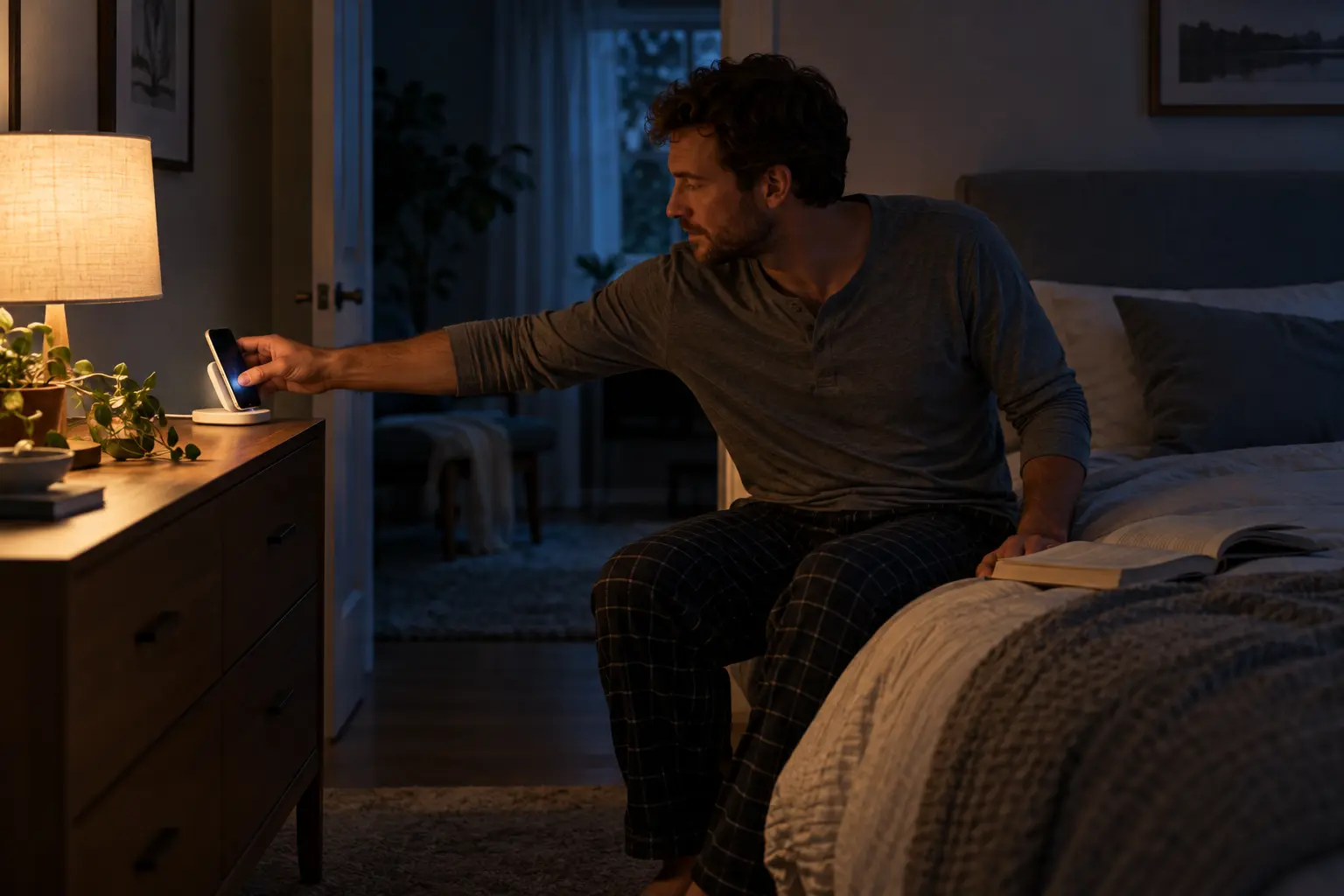
Four ways a screen can move bedtime
Association studies cannot always determine direction: people with insomnia may use devices because they are awake. Experimental light research supports biological plausibility, while real-world effects depend heavily on behavior and exposure.
Why night mode is not a complete solution
A warmer screen may reduce short-wavelength light, but it does not end a conversation, stop autoplay, remove work pressure, or return the minutes already spent awake. Brightness and proximity also remain relevant. Treat filters as a supporting control, not permission for unlimited bedtime use.
The practical question is not “Are screens bad?” It is “Which screen behavior repeatedly displaces my sleep?” A video call with family, an accessibility tool, and doomscrolling serve different purposes and need different solutions.
Run a seven-night screen-boundary test
- Record the last screen use and actual lights-out time for three nights.
- Identify the activity that most often overruns.
- Set a stopping alarm thirty to sixty minutes before intended sleep.
- Charge the phone beyond arm's reach and silence nonessential alerts.
- Replace the function: paper book, audio with screen off, shower, stretching, or a written task list.
- Compare sleep opportunity, sleep onset, awakenings, and next-day hunger.
If work requires late screens, lower ambient and screen brightness, finish the most activating tasks first, and create even a brief non-work transition.
How delayed sleep can affect weight management
A later bedtime can lengthen the eating window and reduce total sleep. Short sleep may increase food reward, fatigue, and eating opportunities, making a calorie target harder to maintain. This is a behavioral risk pathway, not proof that a phone directly creates body fat.
Do not compensate for a late night with severe restriction. Keep regular meals, use caffeine early enough to protect the next bedtime, and return to the normal schedule. Persistent insomnia is better addressed with qualified care, including evidence-based insomnia treatment, than with endless sleep-hygiene optimization.
How light affects the body clock
Light in the evening, especially bright and blue-enriched light, suppresses melatonin and shifts the body clock later. Studies of reading on light-emitting devices before bed found longer time to fall asleep and lower next-morning alertness compared with printed books. The content can matter as much as the light: engaging games, messages and videos keep the brain alert.
A practical screen routine
- Set a fixed time to stop work and social media, ideally an hour before bed.
- Charge your phone outside the bedroom.
- Use night mode and lower brightness if you must use a device.
- Replace the last screen activity with reading, stretching or a shower.
- Keep the bedroom dark and cool.
Where a supplement fits
Caffeine and late screens both push sleep later. If you take any stimulant, keep it to the morning to protect sleep.
Once the practical steps in this guide are working, decide whether an optional supplement adds enough value. Start with the Fat Burn Active review; if the formula and limitations are acceptable, see the current price on the official site. We may receive a commission.
Frequently asked questions
Is night mode enough?
It may help a little, but stopping engaging screen use before bed matters more.
How long before bed should I stop using screens?
An hour is a common recommendation; even 30 minutes helps.
Does poor sleep affect weight?
Short sleep is linked with higher appetite and more snacking the next day.
What should I change first?
Move the phone out of the bedroom.
Sources
- Effects of light on human circadian rhythms and sleep
- Light-emitting eReaders and circadian sleep
- Screen use in bed and insomnia study
- CDC: About sleep
- NHLBI: Healthy sleep habits
Sources reviewed September 15, 2026. This article is general educational information, not medical advice, diagnosis, or treatment.