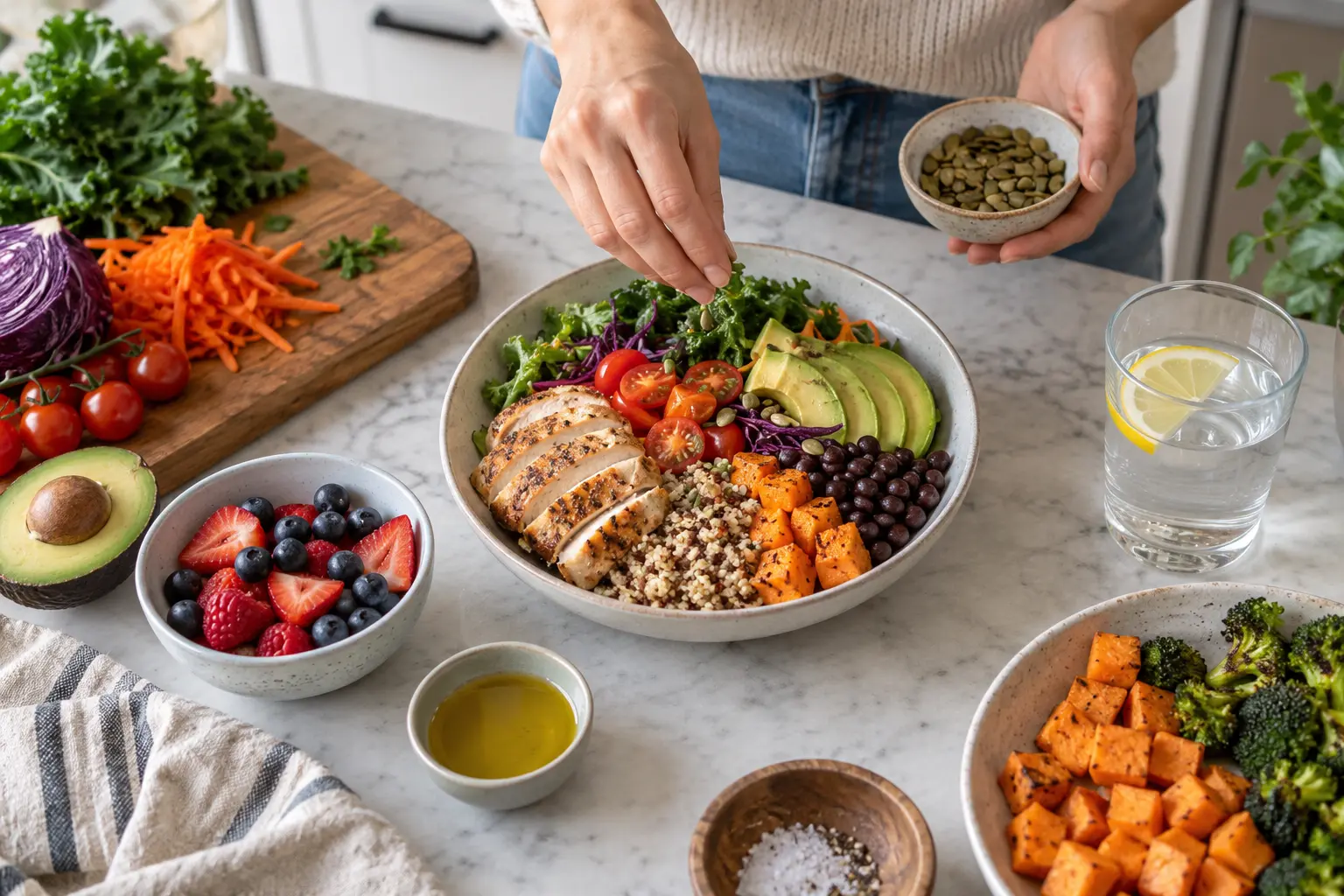
The four-anchor meal builder
There is no universal plate percentage. Someone training hard, an older adult with low appetite, and a person managing gastrointestinal symptoms may need different volumes and textures.
Troubleshoot why the meal failed
If hunger returns in an hour, check whether the meal was mostly liquid, very small, low in protein, low in fiber, or missing enough energy. If the stomach feels full but cravings persist, the meal may lack flavor, texture, or an expected carbohydrate. If fullness is uncomfortable, reduce bulky raw foods and use cooked options rather than forcing volume.
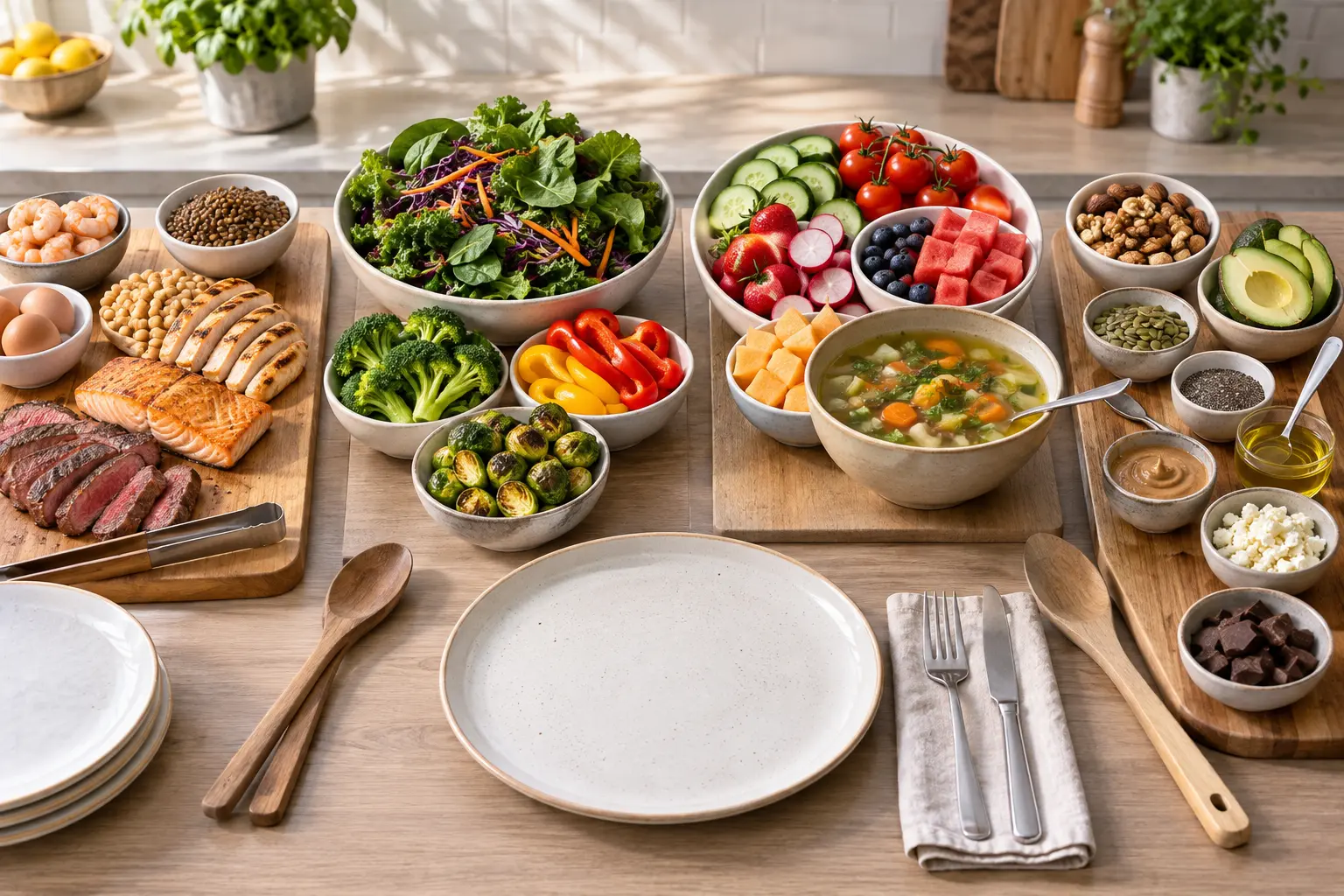
Example: upgrade without doubling calories
Leo’s lunch is crackers and a sweet coffee. He replaces part of the crackers with chicken and beans, adds vegetables and fruit, keeps a portion of crackers for crunch, and drinks water. The result supplies protein, fiber, volume, and enjoyment. He tests afternoon hunger rather than assuming the “healthier” label guarantees success.
Why each component adds fullness
- Protein is the most satiating macronutrient for most people and helps preserve muscle during a diet.
- Fiber slows digestion and adds bulk.
- Water-rich foods such as vegetables, fruit and soups add volume with few calories.
- Some fat improves flavor and satisfaction, but a little goes a long way calorie-wise.
Studies on energy density show that people tend to eat a similar weight of food at meals, so lowering calories per bite lets you eat a satisfying amount for fewer calories.
Three filling meal examples
- Breakfast: Greek yogurt with berries, oats and a few nuts.
- Lunch: large salad or vegetable soup with chicken, beans or tuna, and a slice of whole-grain bread.
- Dinner: salmon or tofu with roasted vegetables and a modest portion of potatoes or rice.
Each combines protein, fiber and volume without large amounts of added fat or sugar.
Eating speed and fullness
Fullness signals take time to build after you start eating. Meals eaten quickly or while distracted are linked with eating more. Putting the fork down between bites, starting with soup or salad, and eating at a table rather than in front of a screen give those signals time to work.
Where a supplement fits
No capsule makes a small, low-protein meal filling. Building the plate well is the main tool for controlling hunger.
A supplement is not required to benefit from this guide. If your foundations are already in place, use the independent Fat Burn Active review to judge whether the formula has a useful optional role. If it fits your expectations and stimulant tolerance, check the current price on the official site. We may receive a commission.
Frequently asked questions
Must every meal contain meat?
No. Dairy, eggs, soy foods, beans, lentils, and combinations of plant foods can contribute protein.
Does fat make a meal filling?
It can add satisfaction and slow eating, but it is energy dense, so portion and context matter.
Are smoothies as filling as solid meals?
Often less so for some people; test texture, chewing, protein, fiber, and the complete portion.
Sources
- Dietary Guidelines for Americans
- Harvard Healthy Eating Plate
- Dietary fiber and appetite review
- Protein and satiety review
- Energy density and weight management
Sources reviewed September 17, 2026. This article is general educational information, not medical advice, diagnosis, or treatment.