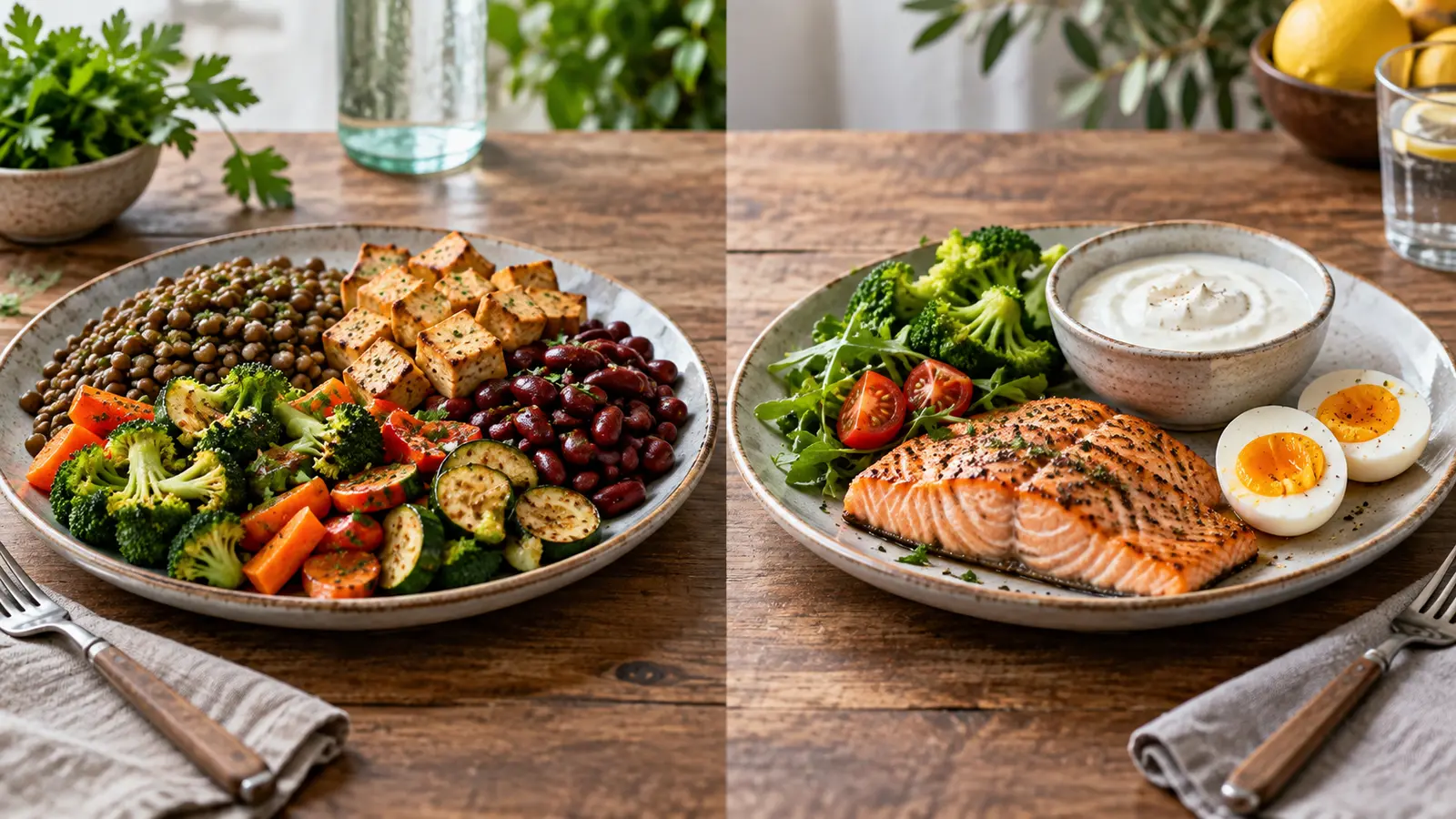
What comparison studies suggest
Acute crossover trials sometimes find equal or greater fullness after bean- or legume-based meals than after meat meals, but findings depend on matched calories, protein, fiber and meal texture. A recent systematic review concluded that plant and animal proteins can influence appetite differently, while emphasizing substantial variation among foods and study designs.
An isolated shake comparison cannot predict a lentil stew versus a salmon dinner. Short-term fullness ratings also do not prove long-term weight loss. Use the evidence to identify meal variables, not to crown one protein kingdom.
Compare the whole plate
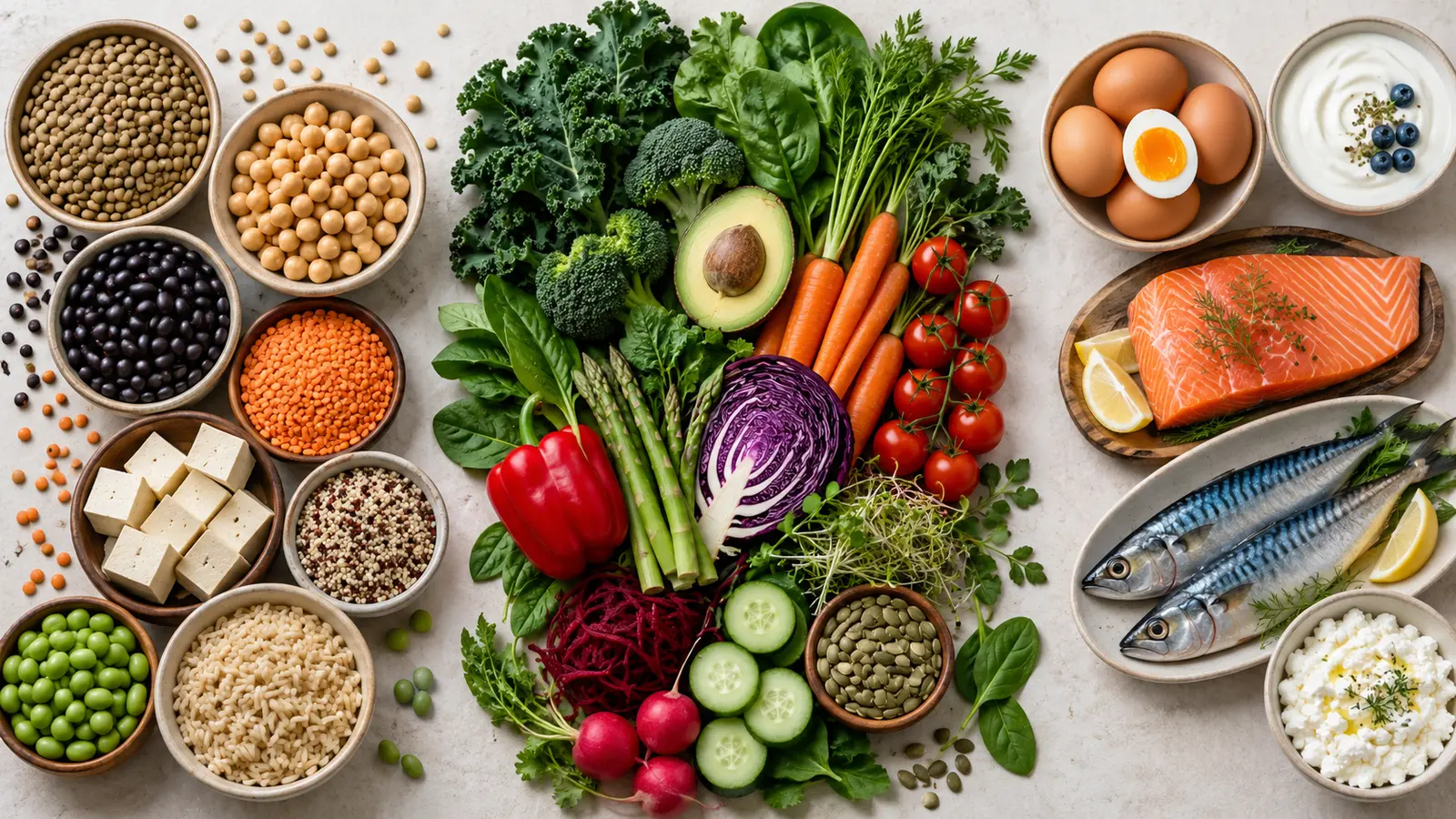
Build satisfying versions of either pattern
For a plant meal, combine legumes, tofu, tempeh or seitan with vegetables, an appropriate whole-grain or potato portion, and a measured flavorful fat. For an animal-based meal, anchor with fish, eggs, poultry, yogurt or another suitable food, then add vegetables, fruit, beans or whole grains for fiber and volume.
Plant proteins can require larger portions or combinations to reach a chosen protein target. Animal foods can be compact but may become less filling when served with little produce or fiber. Variety helps cover amino acids and micronutrients without requiring perfect pairing at every meal.
Run your own fair comparison
- Choose two lunches with similar calories and protein.
- Keep eating time and activity comparable.
- Rate hunger before, immediately after and three hours later.
- Record gastrointestinal comfort and later snacking.
- Repeat each meal at least three times.
- Keep the option that works in ordinary life.
People following fully plant-based diets should plan vitamin B12 and may need attention to iron, calcium, iodine, vitamin D and omega-3 fats.
Protein quality and amount
Animal proteins contain all essential amino acids in proportions that suit the body well. Most single plant proteins are lower in one or more amino acids, but combining sources such as legumes and grains over the day provides a complete profile. Soy protein is complete. Plant-based eaters may need slightly more total protein to get the same effect on muscle.
Where a supplement fits
Both plant and animal proteins can support fullness. A supplement cannot replace a well-built meal.
No supplement can compensate for a protein pattern that is nutritionally incomplete or too unpleasant to maintain. Fat Burn Active is optional and cannot repair an eating environment, replace sleep or treat emotional eating. Its current official page lists at least 120 mg caffeine per serving from caffeine anhydrous and guarana, additional unquantified caffeine from green-tea extract, and bitter-orange extract standardized to 6 mg synephrine. Feeling more alert or less hungry for a short time is not proof of meaningful fat loss.
A supplement is not required to benefit from this guide. If your foundations are already in place, use the independent Fat Burn Active review to judge whether the formula has a useful optional role. If it fits your expectations and stimulant tolerance, check the current price on the official site. We may receive a commission.
Frequently asked questions
Is plant protein as filling as meat?
Legume-based meals can be just as filling, often because of their fiber.
Do vegetarians get enough protein?
Usually yes, with a variety of legumes, soy, dairy or eggs, grains and nuts.
Which is better for weight loss?
The pattern you can keep long term, with adequate protein and fiber, works best.
Sources
- Plant versus animal protein and appetite review
- Legume versus meat meal crossover trial
- Plant- and animal-based meal appetite study
- USDA MyPlate: Protein foods
Sources reviewed September 13, 2026. This article is general educational information, not medical advice, diagnosis, or treatment.