
Two dinners create more work and more friction
Cooking a “diet meal” plus a family meal doubles decisions, cleanup, and opportunities to abandon the plan. It can also make children or partners feel that ordinary food is forbidden while the dieter feels excluded. Yet eating an unmeasured share of every family favorite may make the intended deficit disappear.
The middle path is shared components with individual assembly. The household eats together, but everyone can choose portions and additions suited to appetite, age, preference, and health needs.
Use the base-plus-options formula
Hold a ten-minute family menu meeting
Ask each person for one dinner they will eat, then translate those requests into flexible meals. Tacos become bowls or tortillas with the same fillings. Pasta gets a tomato-and-protein base with cheese served separately. Burgers keep the shared main item while sides and portions vary.
Choose two emergency meals for nights when the plan collapses: eggs with frozen vegetables and toast, canned-bean chili, rotisserie chicken with microwave grains and salad, or another household favorite. A backup prevents the takeout decision from becoming a weekly surprise.
Control the meal before the first bite
Do not arrive at dinner extremely hungry because you “saved calories.” Eat regular meals earlier. Plate protein and produce first, add a deliberate starch portion, and sit down with the amount you intend to eat. Keep serving dishes away from the table when repeated automatic helpings are a problem.
For dessert or richer meals, decide frequency and portion in advance. Inclusion is easier to sustain than pretending family celebrations will stop. One meal does not determine the week; an unplanned pattern can.
Example: one taco night, four different plates
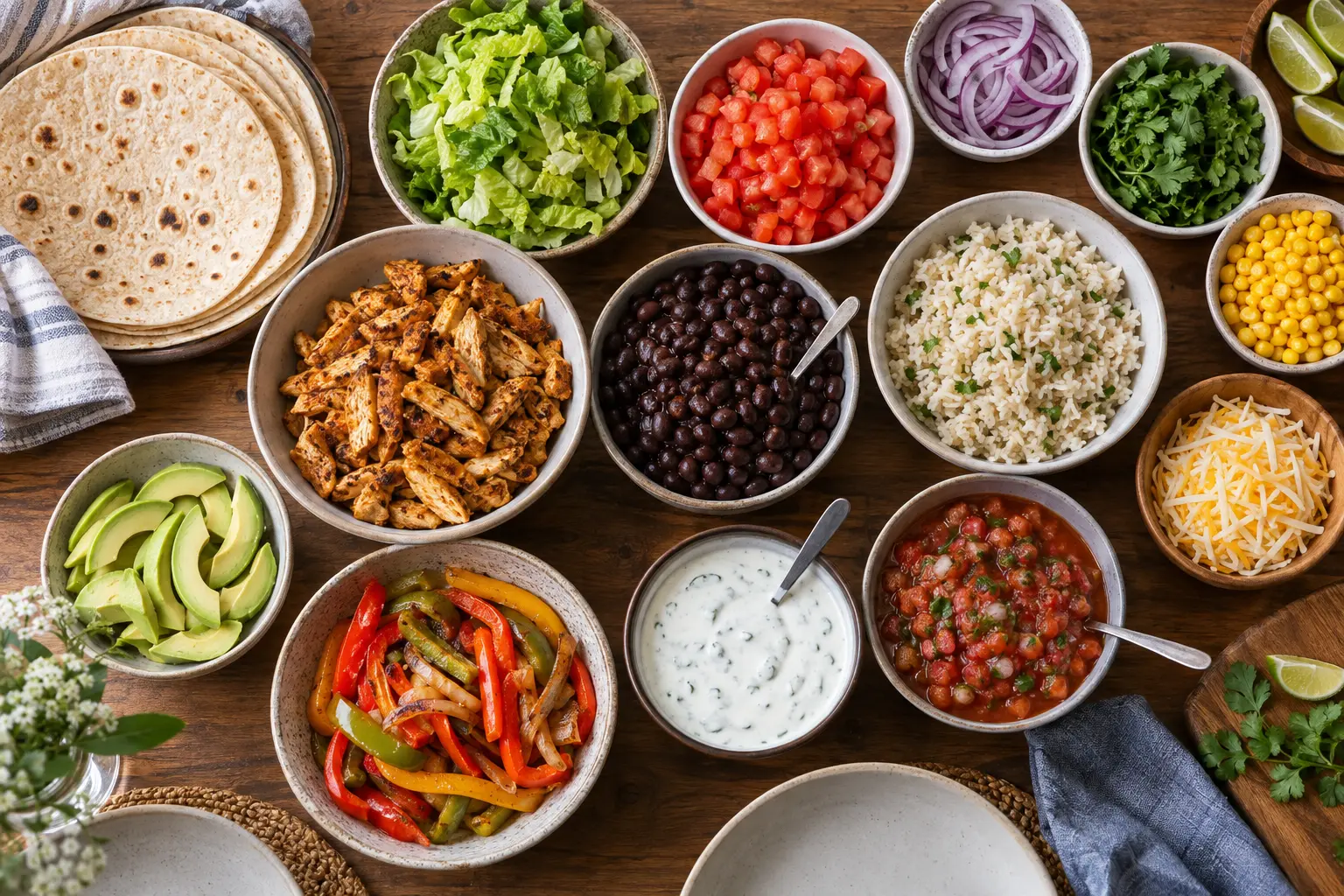
A family makes seasoned beans and chicken, chopped vegetables, tortillas, rice, cheese, salsa, and yogurt sauce. One child chooses a tortilla with rice and chicken. Another prefers a bowl. The dieting adult builds a vegetable-heavy bowl with beans, chicken, salsa, one measured cheese portion, and a tortilla.
No ingredient is branded “diet food.” The shared meal remains recognizable, and portion control happens through assembly rather than a lecture at the table.
Use neutral boundaries, not food policing
Say, “I am planning my portion before dinner,” rather than asking the family to hide food or copy your target. Request practical support: keep one trigger snack in an opaque cupboard, save leftovers promptly, or agree on takeout night in advance. Adults can negotiate these changes; children should not carry responsibility for an adult's weight goal.
If a family member needs a therapeutic diet, has allergies, is pregnant, is a child, or has an eating disorder, their needs may not match yours. A registered dietitian can help create a shared menu with safe variations. Your calorie target should never be imposed on the whole household by default.
Make the system work on an imperfect week
Create a household meal matrix with five columns: main protein, vegetable, starch, optional extras, and backup. Fill three rows using foods everyone already accepts. This exposes whether the week requires too many one-use ingredients and makes substitutions easier when an item is unavailable. Keep the matrix on the refrigerator or shared phone note.
Use the same ingredient in different forms. Roasted chicken can become dinner, a lunch wrap, and soup; beans can become tacos, bowls, or pasta sauce. Deliberate leftovers reduce cooking work, but portion them after dinner so the next day's lunch is not gradually eaten from the serving dish. Label family portions only when useful, without assigning moral value.
For takeout, choose the restaurant before hunger is high and decide whether the meal needs a vegetable side, shared starter, sauce on the side, or a saved half. You do not need to order the lowest-calorie item every time. You need a repeatable decision that fits the frequency of takeout in your real week. A monthly celebration and a four-times-weekly order require different planning.
Review the household system, not only your willpower. Which dinner caused conflict? Which option produced waste? Which night needed a faster backup? Keep family favorites that worked and modify one difficult meal at a time. When the plan respects taste, culture, schedules, and children's nutritional needs, support becomes more likely and the dieting adult does not have to perform a separate identity at every meal.
The final weekly checkpoint
Finally, decide who plans, shops, cooks, and clears up. Unequal food labor can derail an otherwise sensible menu. Rotate tasks where possible, use shortcuts without apology, and keep the weekly plan visible so one person is not repeatedly asked to invent dinner while hungry.
Sources
- USDA MyPlate: Meal Planning
- NHS Healthier Families Recipes
- CDC: Healthy Eating for a Healthy Weight
- NIDDK: Choosing a Safe Weight-Loss Program
Sources reviewed September 14, 2026. This article is general educational information, not medical advice, diagnosis, or treatment.