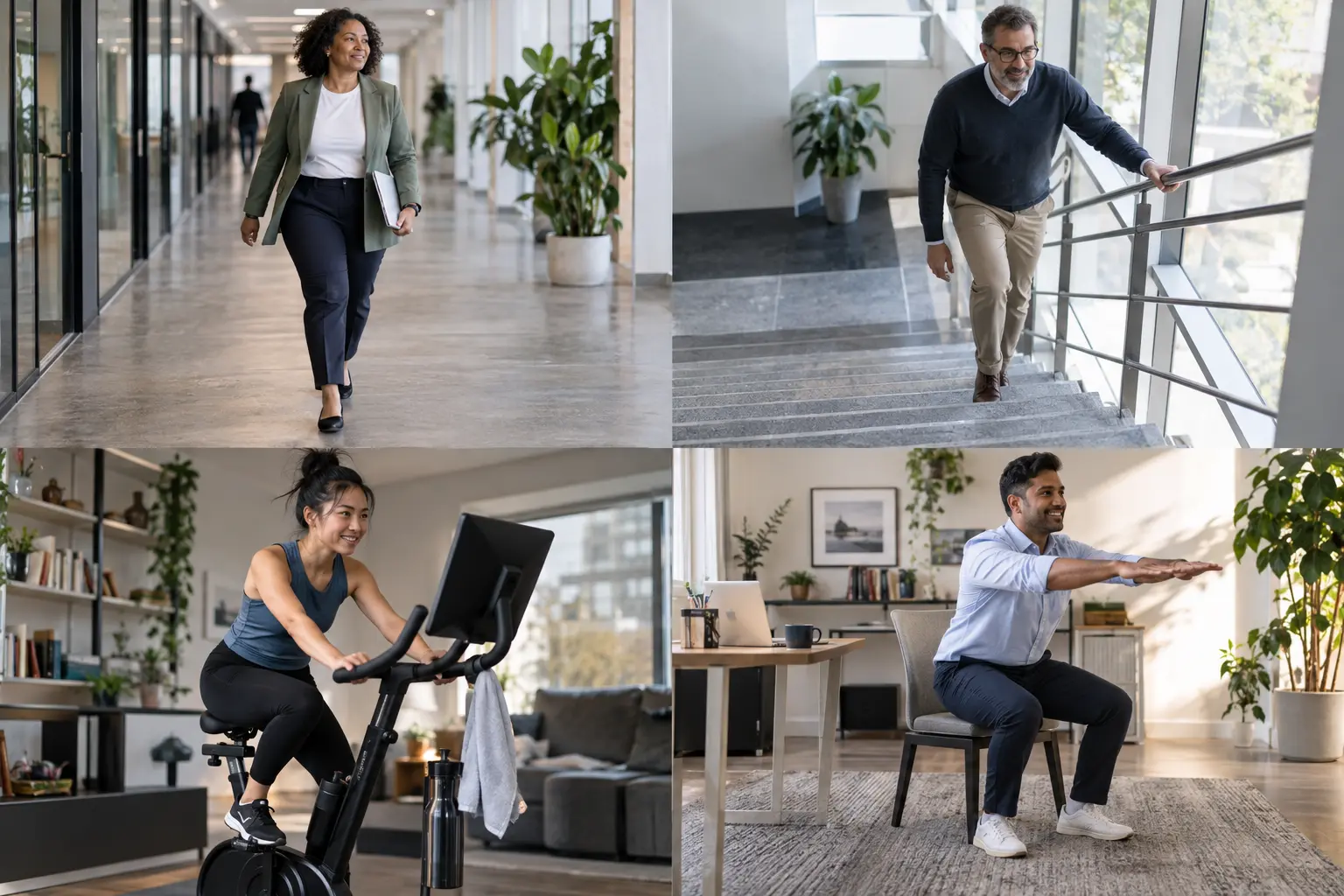
An activity snack needs a clear dose
The term often describes isolated bouts lasting seconds to several minutes, sometimes vigorous and sometimes moderate. Research protocols may use repeated stair climbing or cycling bursts with long recovery. That is different from casually standing once per hour.
Define movement, duration, intensity, frequency, and recovery. Without those details, two “exercise snack” programs may deliver very different loads and outcomes.
What short-bout evidence supports
Systematic reviews suggest repeated exercise snacks can improve cardiorespiratory fitness in inactive adults, with effects on other cardiometabolic measures varying. Separately, interrupting sitting with light or moderate activity can improve acute post-meal glucose or insulin responses in some groups.
Neither result proves large weight loss. Trials are often short, protocols differ, and participants may receive supervision. Real-world adherence determines whether the laboratory idea becomes meaningful activity.
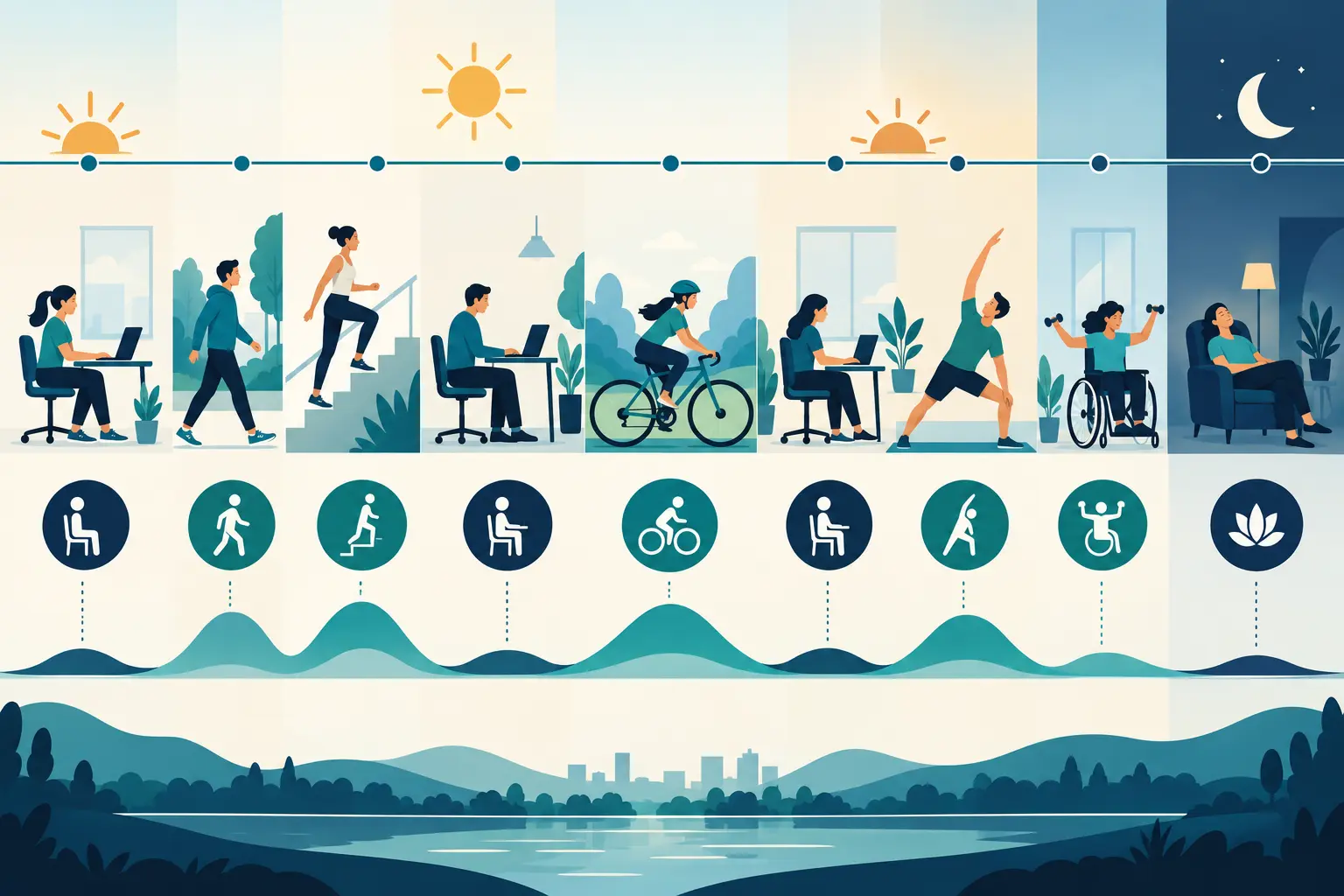
Build a menu instead of repeating one movement
Use three cues and protect recovery
Choose after the first work block, after lunch, and before shutting down. Start with one minute at each cue for a week. Then lengthen only one bout. Hard snacks should not be scattered thoughtlessly around strength training, physical work, or poor sleep.
If breathlessness stays severe, technique breaks, or joints hurt, reduce intensity. Short duration does not make maximal effort automatically safe.
Personalize the routine
Activity snacks do not need special equipment. A corridor, safe staircase, stationary bike, sturdy chair, or small clear floor area may be enough. Prepare the space so starting takes seconds.
Keep vigorous bouts away from situations where sweat, dizziness, or delayed recovery creates a work or safety problem. Moderate options are often more portable and repeatable across demanding days, meetings, travel, and changing energy levels. The plan should also respect colleagues, shared spaces, clothing, and privacy.
Activity snacks and blood sugar
Studies that interrupt prolonged sitting with two to five minutes of light walking or simple bodyweight exercise every 20–30 minutes have shown lower blood sugar and insulin responses after meals compared with sitting continuously. A short walk after eating appears especially useful. This makes activity snacks a sensible option for people with insulin resistance or type 2 diabetes, alongside their regular treatment.
Ten activity snacks you can do anywhere
- Climb one or two flights of stairs.
- Ten sit-to-stands from a chair.
- March on the spot for two minutes.
- Calf raises while waiting for the kettle.
- Wall push-ups.
- A brisk walk to a farther restroom or water fountain.
- Gentle squats during a phone call.
- Carrying shopping in two trips.
- Stretching the hips and shoulders after a meeting.
- A five-minute walk after each meal.
Where a supplement fits
Short movement breaks are free and need no supplement. Keep them easy enough to repeat several times a day.
Once the practical steps in this guide are working, decide whether an optional supplement adds enough value. Start with the Fat Burn Active review; if the formula and limitations are acceptable, see the current price on the official site. We may receive a commission.
Frequently asked questions
Do short bouts count toward guidelines?
Yes. US guidelines count activity of any length toward the weekly total.
How many activity snacks should I do?
Start with three a day tied to fixed cues, such as after meals, and build from there.
Do they need to be intense?
No. Light movement already helps blood sugar; brief harder bouts such as stairs add fitness benefits.
Can they replace a workout?
They can cover part of your activity, but strength training on two days a week is still recommended.
Sources
- Exercise Snacks Systematic Review
- WHO Physical Activity Guidelines
- US Physical Activity Guidelines
- Breaking Up Sitting Review
- CDC: Measuring Activity Intensity
Sources reviewed September 15, 2026. This article is general educational information, not medical advice, diagnosis, or treatment.