
Build guardrails before setting a target
Track actions when numbers are unhelpful
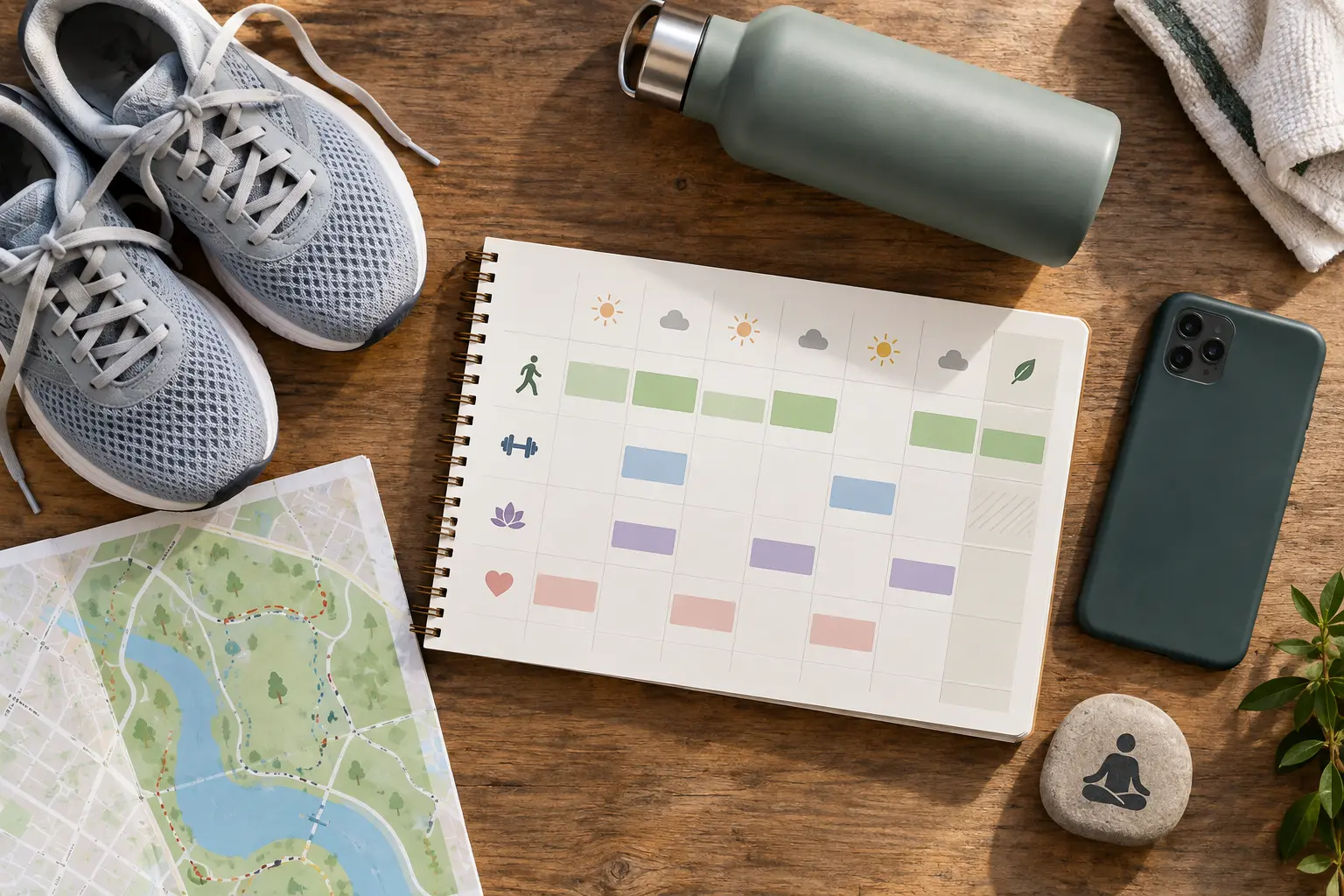
A person can record walking breaks completed, outdoor time, active commuting days, or whether long sitting blocks were interrupted. These measures can support health without ranking every day. Phone settings may hide live counts while retaining a weekly summary; the device can also be removed for selected days.
Step totals miss cycling, swimming, strength work, carrying, wheelchair propulsion, and many household tasks. A lower count is not automatically a less valuable day.
Example: replace the streak with a decision
Jon checks his watch repeatedly and walks through knee pain to preserve a streak. He changes the goal to four planned lunchtime walks per workweek, reviews totals only on Sunday, and makes pain an automatic rest signal. When the urge to compensate remains strong, he removes the counter and discusses the pattern with a qualified clinician.
Research can identify associations between app use and disordered eating or compulsive exercise, but it does not prove that every tracker causes harm. Personal response decides whether the tool remains useful.
How many steps are worth aiming for
The 10,000-step goal began as a marketing slogan rather than a scientific threshold. Large studies have found that health benefits rise from roughly 4,000 steps a day and level off somewhere around 7,000–10,000 for many adults, with lower thresholds in older people. Increasing from your current average by 1,000–2,000 steps is a sensible first target.
Using a tracker in a healthy way
- Look at the weekly average rather than every day.
- Turn off hourly reminders if they cause stress.
- Accept lower numbers on rest days, during illness and after hard training.
- Count other activities, such as cycling or swimming, in your own notes.
- Take breaks from wearing the device if you notice compulsive checking.
Signs tracking is becoming harmful
Walking through pain to reach a number, feeling anxious or guilty when you miss a target, compensating for meals with extra steps or being unable to rest are signs to step back. These patterns can be linked to compulsive exercise and disordered eating. Talking to a doctor or psychologist is worthwhile if they persist.
Where a supplement fits
Supplements cannot make up for low movement, and they should never be used to keep exercising through fatigue or injury.
A supplement is not required to benefit from this guide. If your foundations are already in place, use the independent Fat Burn Active review to judge whether the formula has a useful optional role. If it fits your expectations and stimulant tolerance, check the current price on the official site. We may receive a commission.
Frequently asked questions
Do I need a step target?
No. Walking time, breaks, routes, or another activity measure may serve the same purpose.
Is a weekly average better?
It can reduce daily rigidity, but it is not better if you still compensate compulsively.
When should I stop tracking?
Pause when counting repeatedly worsens anxiety, guilt, food restriction, pain, or compulsive exercise and seek appropriate support.
Sources
- Physical Activity Guidelines for Americans
- WHO: Physical Activity
- Diet and fitness app use and compulsive exercise
- NIDDK: Staying Active at Any Size
- Reliability and validity of commercial wearables
Sources reviewed September 17, 2026. This article is general educational information, not medical advice, diagnosis, or treatment.