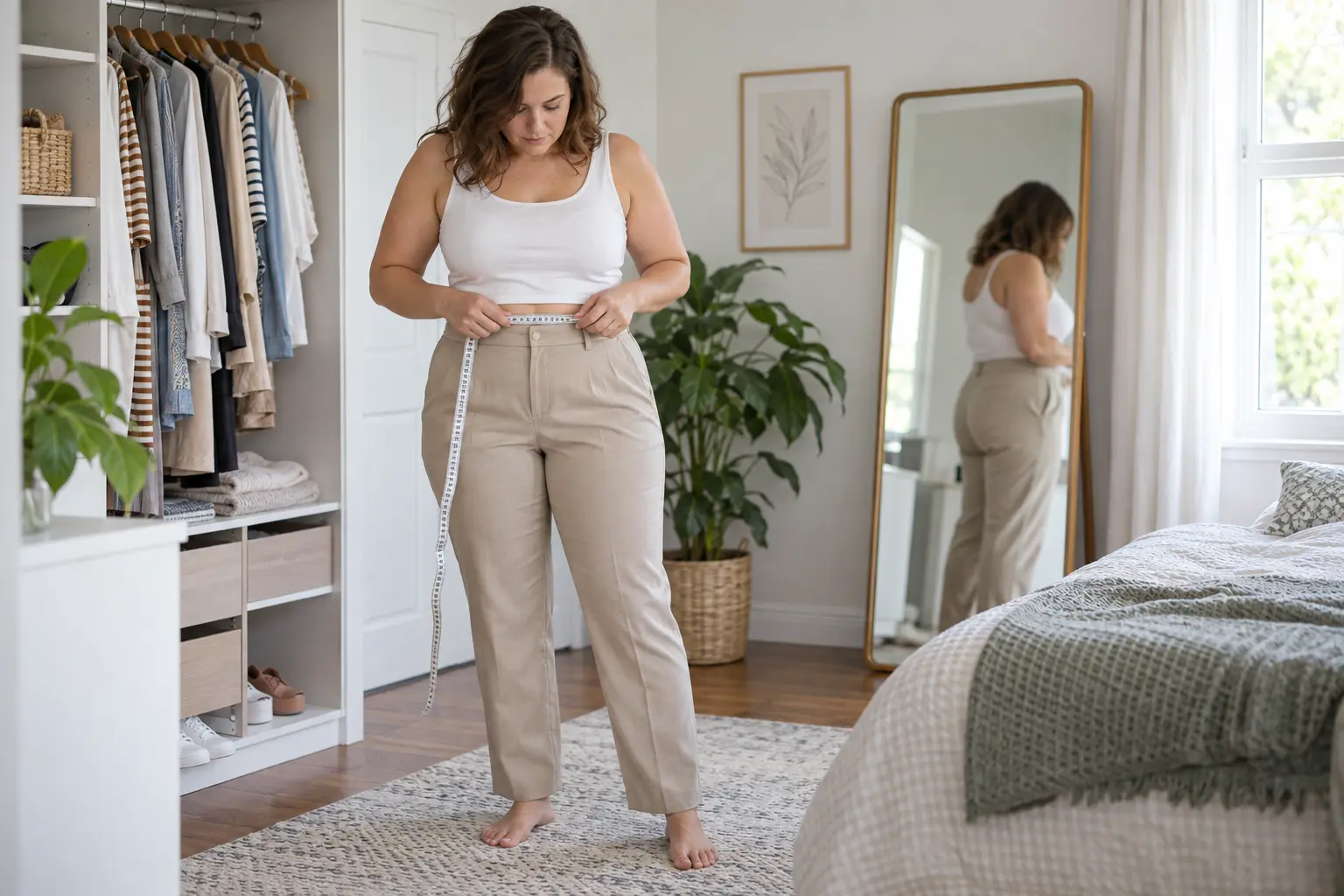
The problem with one-number progress tracking
Clothing-fit tracking uses one familiar garment as a repeated contact point for changes around the waist, hips, thighs, chest, shoulders, or another specific region. That sounds objective, but every result is produced by a procedure. If the procedure changes, the number or image can change even when the body has not changed meaningfully. The first task is therefore not collecting more data. It is deciding what the method can answer and making the next comparison reproducible.
Its main advantage is low cost, real-life relevance, and sensitivity to shape changes when scale weight is noisy. Its central limitation is that brand sizes are not standardized, while fabric stretch, laundering, drying, tailoring, meals, swelling, posture, and wear can change fit without fat change. Treat the result as an estimate or observation, not a diagnosis, moral score, or permission to make an aggressive diet change.
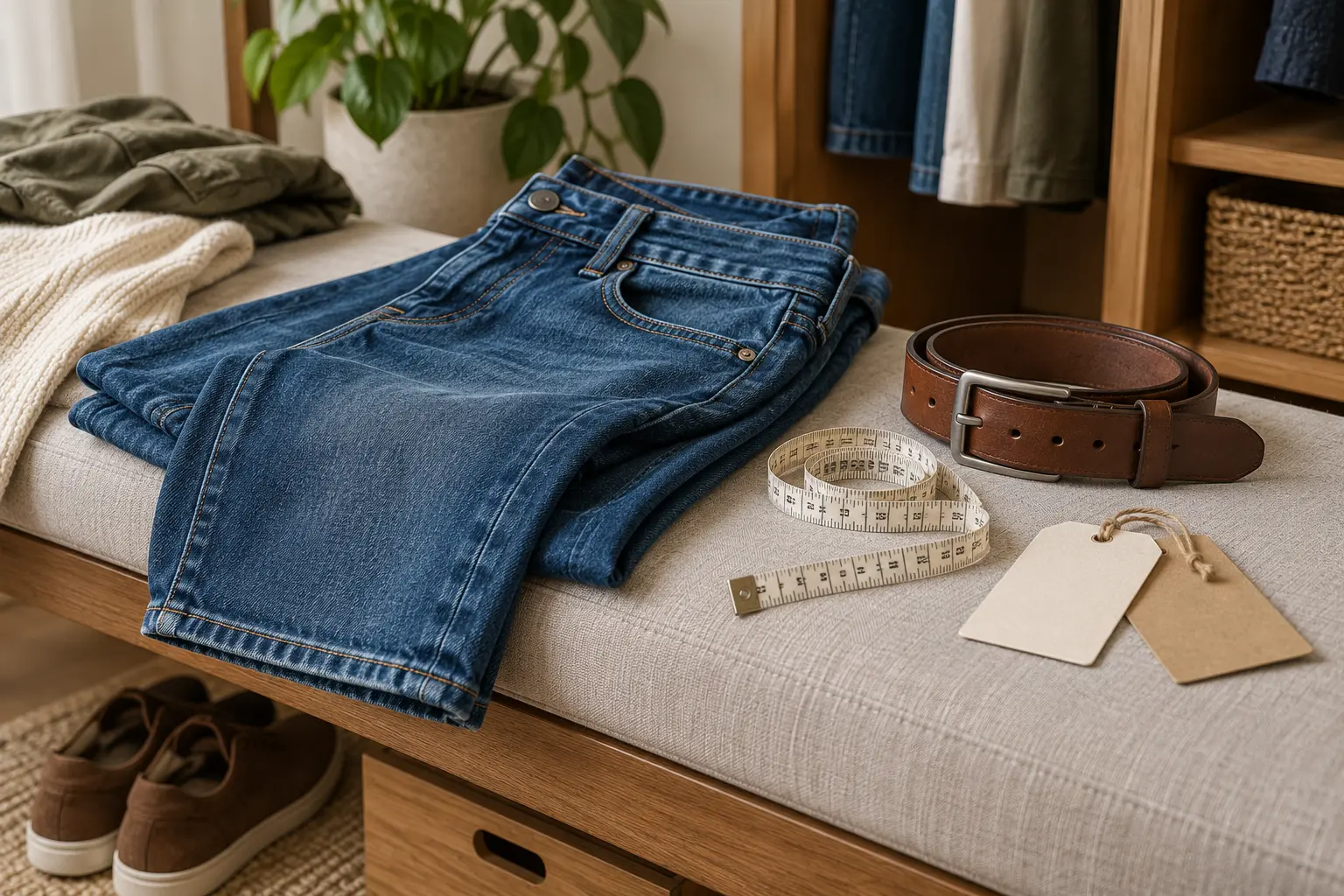
A repeatable practical protocol
- Choose one durable, familiar, low-stretch garment that fits safely.
- Record fabric, care routine, closure, belt hole, and the garment’s condition.
- Check every two to four weeks at a similar time and point relative to meals.
- Rate separate zones such as waist, hips, thigh, chest, and seated comfort.
- Pair the observation with waist, average weight, and one fitness marker.
Worked example
Weight remains stable for eight weeks while the reference trousers loosen at the waist, waist circumference falls three centimeters, and squat performance improves. Together the signals are compatible with recomposition, though they cannot quantify exact tissue change.
A four-part decision system
- Baseline: preserve raw results, setup details, date, and context.
- Threshold: define how much change and how many repeat observations matter.
- Triangulation: require agreement with at least one independent measure.
- Action: prewrite continue, investigate, adjust, and seek-care rules.
Use a scheduled interval rather than checking after every difficult meal or weigh-in. A longer interval gives real change time to exceed noise and reduces compulsive testing. For a broader system, use waist versus scale weight and fitness markers.
Choose a garment that can be repeated fairly
A single pair of trousers can provide a practical signal, but fabric stretch, laundering, wear, and seasonal fit change the test. Choose an ordinary garment that is neither painfully tight nor very loose. Record the exact item and the area you are judging: waistband closure, thigh comfort, shoulder range, or another clear observation. Trying several different garments and selecting the most flattering result is not a consistent measure. One baseline photograph of the garment label or a simple note can prevent confusion later.
Use the same time of day and similar conditions when possible. A late restaurant meal, menstrual-cycle changes, constipation, or a recently intense workout can affect comfort and water retention without changing body fat. Rate fit with a small stable description such as comfortable, snug, or cannot close; avoid turning the system into a daily body-checking ritual. A monthly check may give a clearer trend than repeated trying-on during a single variable week.
Clothing responds to shape at the places it touches, so it cannot tell whether a change came from fat mass, muscle, posture, fluid, or a shrinking garment. It also misses changes elsewhere. If trousers become looser while strength training improves and the scale hardly moves, the signals can still coexist. Conversely, a newly stretched waistband is not proof that the whole plan worked. Interpret the observation with an ordinary weight trend, energy, and physical function when those measures are appropriate.
The decision rule should be modest: if the same garment fits differently over several spaced checks, first confirm that the garment and conditions have not changed. Then compare other evidence before adjusting intake or exercise. If the method triggers anxiety, choose a neutral functional marker instead. The value of clothing fit is that it connects progress to daily life; its limits are precisely why one fitting should never determine the next month of behavior.
Frequently asked questions
Which clothes should I use?
A fitted pair of trousers or jeans and a shirt you wear often.
How often should I check?
Every two to four weeks.
Can clothes fit better without weight loss?
Yes, especially if you are building muscle and losing fat at the same time.
Keep the original record rather than only a summary. Future comparisons are easier when the raw observation, setup, relevant context, and reason for any excluded reading remain available. This also prevents a later change in an app, equation, garment, device, or personal goal from rewriting the baseline.
Sources
- Waist circumference as a vital sign
- WHO waist circumference report
- NHS body-measurement techniques
- British Heart Foundation waist guide
- Body-composition techniques
Evidence reviewed September 16, 2026. Educational information only; not medical advice.