This category is broader than caffeine-free fat burners
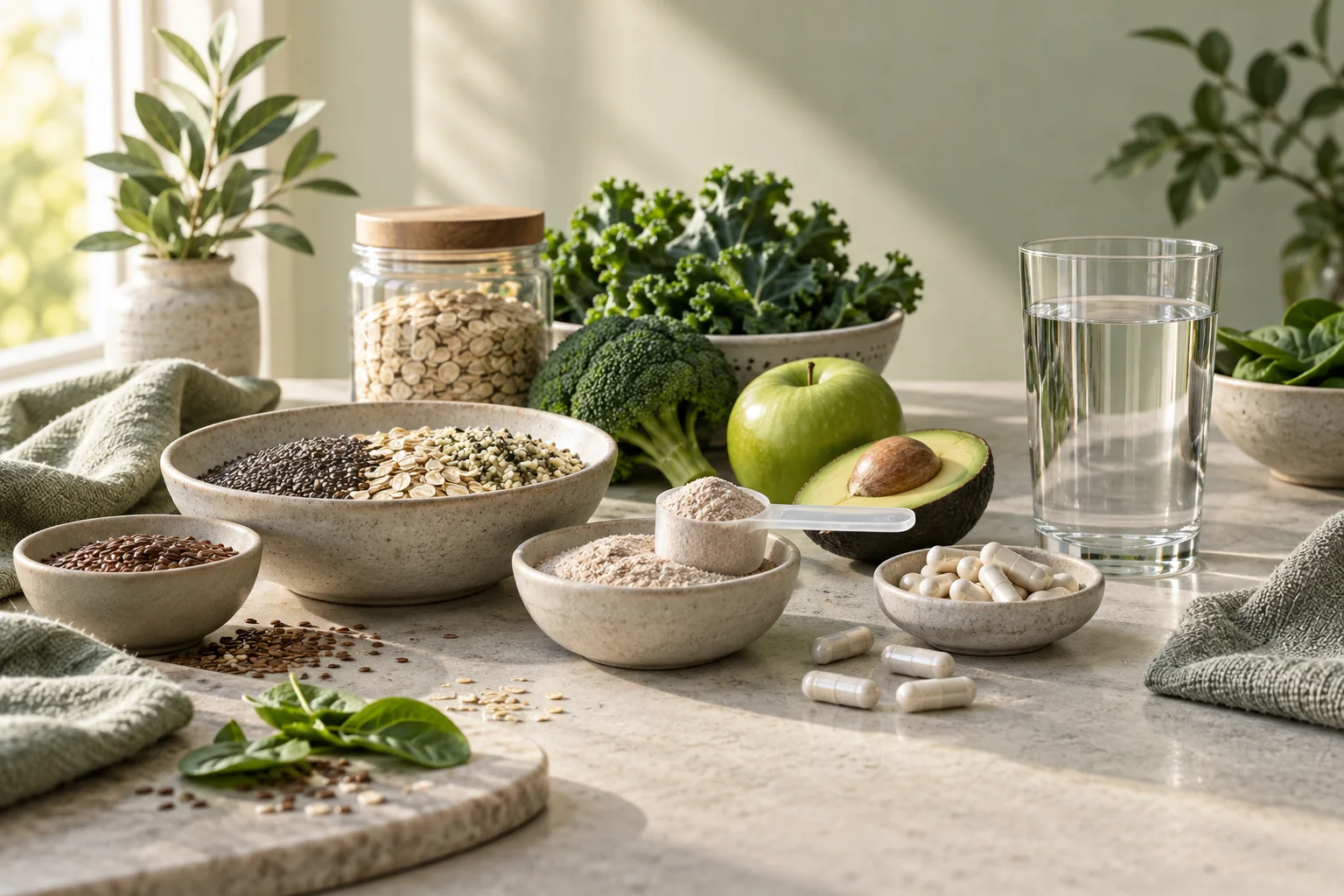
Weight-loss supplements may be sold for fullness, meal replacement, nutrient adequacy, glucose-related claims, absorption, or thermogenesis. Calling every one a fat burner hides the real question. A protein powder can make a meal more convenient; a fiber may affect fullness; neither should be judged by whether it creates a warm sensation.
Define the intended outcome before looking at products. “More control at lunch” can be tracked. “Boost metabolism” is too vague until it becomes a measurable endpoint and time frame. If there is no defined job, there is no rational way to name a best option.
Compare like with like
Verify the caffeine-free claim
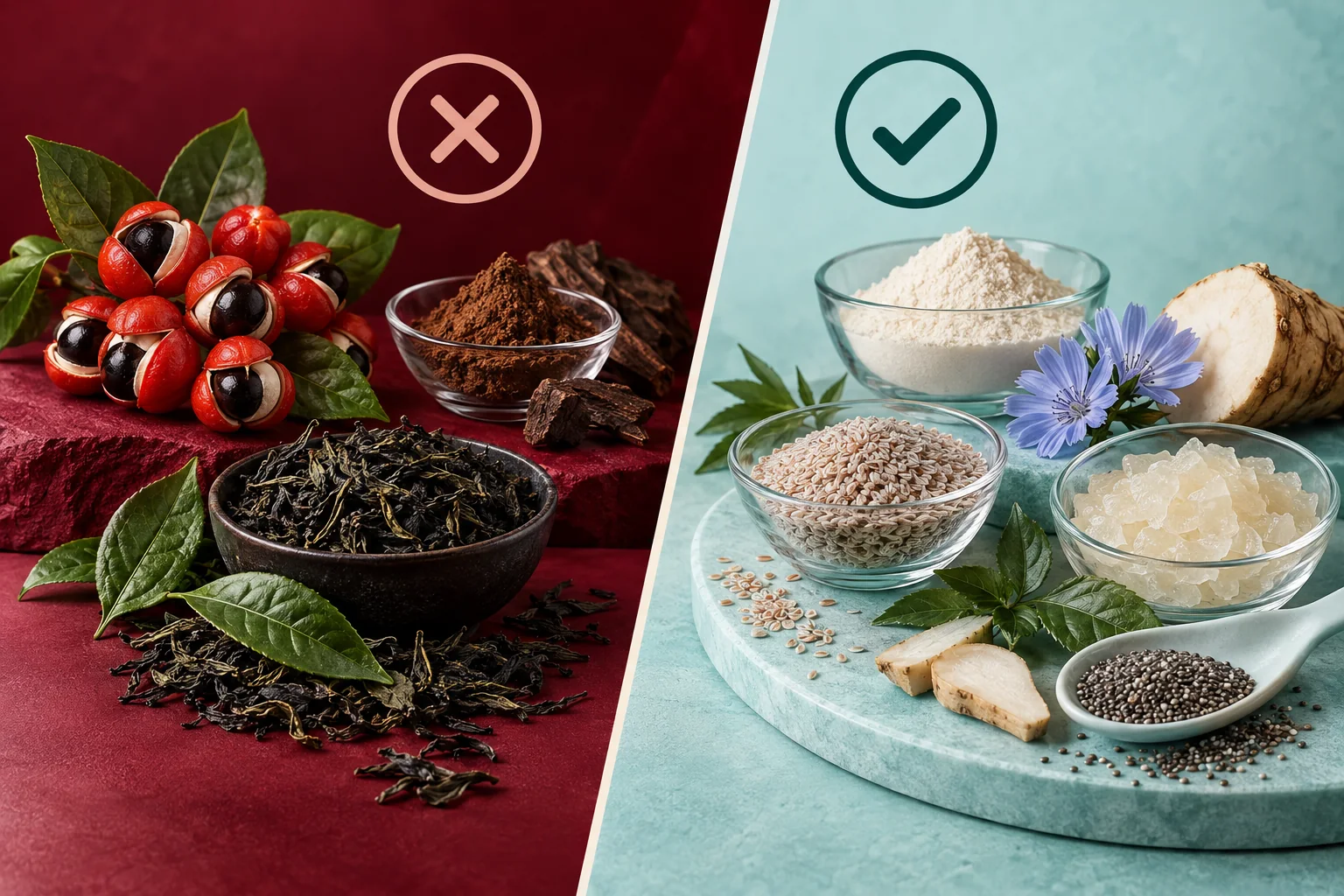
Read the Supplement Facts and other-ingredients panels for caffeine, coffee, tea, green tea, guarana, yerba mate, kola nut, cacao, and blended energy systems. Decaffeinated ingredients may retain small amounts, while an extract can be concentrated differently from a beverage. Ask the maker whether its stated total includes all botanical sources.
“No added caffeine” is weaker than a quantified all-source statement. Also distinguish caffeine-free from stimulant-free; the latter requires checking additional compounds. Save the dated answer because formulas can change.
Test the supplement against its simplest alternative
For a satiety goal, compare a fiber supplement with beans, oats, fruit, vegetables, water, and meal protein. For convenience, compare a shake with a prepared meal. For low energy, investigate sleep, intake adequacy, medication, iron or thyroid issues when clinically appropriate instead of assuming a supplement is the answer.
This does not mean supplements never have a role. It means the comparison should include cost, convenience, tolerability, nutrition, and sustainability. A bottle wins only when its specific advantage matters to the user and the evidence and safety remain acceptable.
Safety of caffeine-free options
Caffeine-free products avoid stimulant effects but can still cause problems. Fiber supplements need plenty of water and should be taken apart from medicines. Some botanicals have been linked to liver injury, including garcinia and concentrated green tea extracts. Chromium and other blood-sugar-active ingredients may interact with diabetes medicines. Check every ingredient against your health conditions and medicines.
Where Fat Burn Active fits
Fat Burn Active is not caffeine-free. Its current label (checked October 2026) implies at least 120 mg caffeine per two-capsule day from caffeine anhydrous and guarana, plus green tea extract, so it is excluded from this comparison.
If you want to avoid caffeine, start with non-stimulant fat burners or fiber-based appetite support. If you can tolerate stimulants, our Fat Burn Active review covers that formula in full.
Frequently asked questions
Is green tea extract caffeine-free?
Not necessarily. The current preparation and an all-source value must be checked.
Is a caffeine-free supplement better for sleep?
It removes one common sleep disruptor, but other ingredients, timing, and individual factors still matter.
What is the best caffeine-free supplement?
There is no universal winner. The answer depends on the defined job, evidence, safety, and whether a simpler option fits better.
Sources
- NIH ODS: Weight-Loss Supplements
- FDA Dietary Supplement Labeling Guide
- NIDDK: Choosing a Safe Weight-Loss Program
- FDA Weight-Loss Product Notifications
Sources reviewed September 8, 2026. This article is general educational information, not medical advice, diagnosis, or treatment.