
The short answer
Fiber supplements may modestly support fullness or weight management, but results depend on fiber type, viscosity, dose, food pattern, water intake, and tolerance. No supplement cancels the energy in an unrestricted diet, and a plausible mechanism is not the same as a clinically meaningful result.
Gel-forming fibers such as psyllium and glucomannan absorb water and can increase meal volume or slow gastric emptying. Fermentable fibers such as inulin feed gut microbes but may cause gas before they improve tolerance. Insoluble fiber mainly adds stool bulk and should not be sold as an automatic appetite suppressant.
What the claim means—and what it does not
Trials of isolated soluble fiber suggest a small average additional weight reduction, with meaningful variation among products and studies. A capsule count alone tells you little: the label must disclose grams per serving, the precise fiber, and directions that make the dose practical.
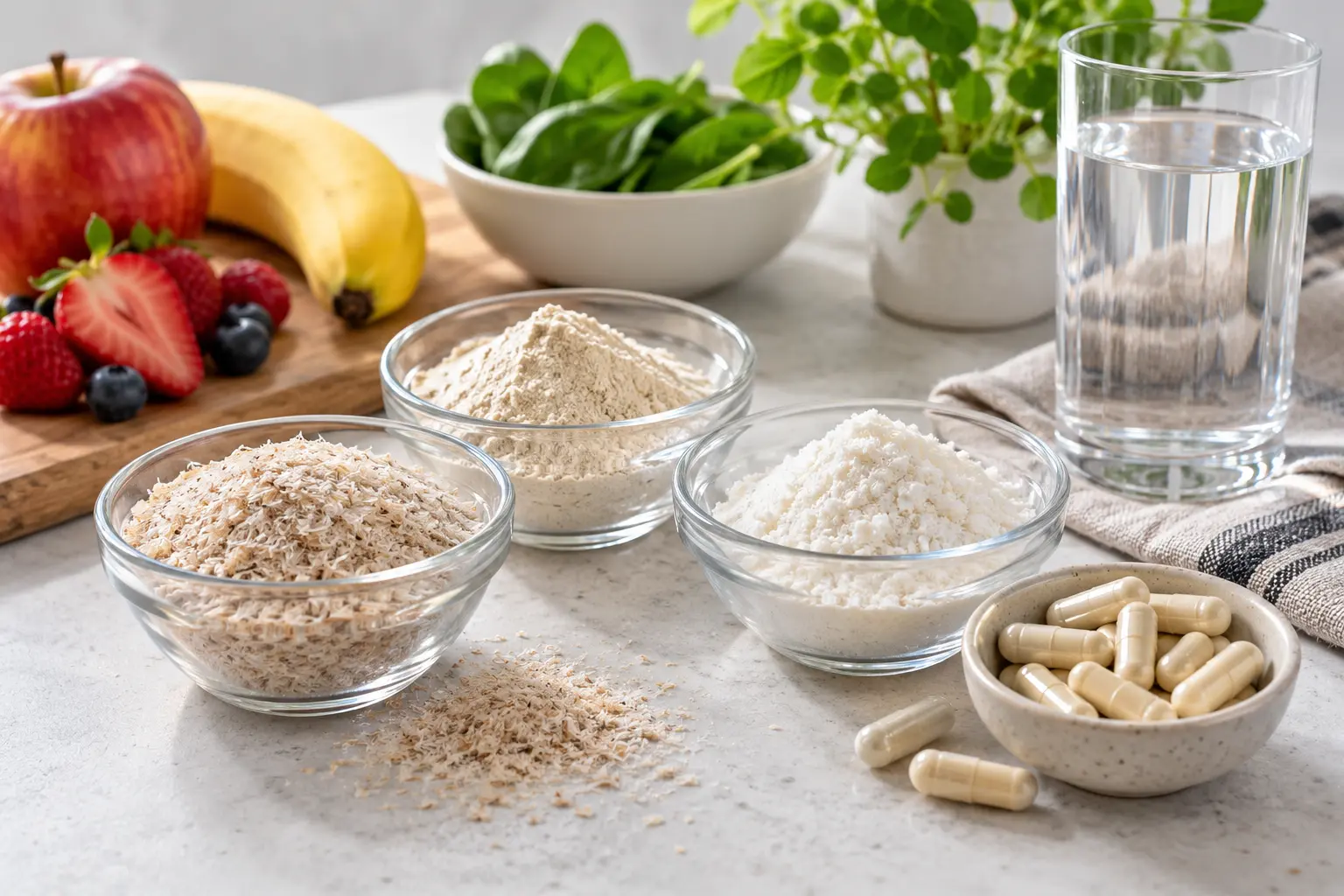
A five-step label and use system
- Name the exact fiber and grams per full daily serving.
- Prefer a transparent single ingredient before a proprietary blend.
- Start below the target dose and increase gradually if tolerated.
- Take it with the instructed amount of water; never dry-swallow expanding fiber.
- Ask a pharmacist about spacing from medicines and supplements.
Worked example
A bottle promises “2,000 mg fiber,” but the serving is four capsules and the user takes two. That supplies only one gram—far below the dose used in many fiber trials. The better comparison is grams actually swallowed each day, not the number printed on the front.
Related Active Body Hub guides
Compare soluble and insoluble fiber, then read our focused guides to psyllium, glucomannan, and inulin.
Match the fiber to the meal and the person
Fiber supplements vary in viscosity, fermentability, dose, and the amount of water needed to use them comfortably. Psyllium, glucomannan, and other fibers are not interchangeable simply because they appear under the same “fiber” category. A claim about fullness after a specific preparation and meal cannot be generalized to a low-dose capsule of another material. Read the grams per full serving and the study's timing relative to food.
Start with the reason a fiber tool is being considered. If meals lack fruit, vegetables, legumes, or whole grains, food changes may provide fiber along with other nutrients and help reveal which meals are least satisfying. A supplement can be a convenient addition for some people but it does not replace an adequate eating pattern. Measure actual hunger, meal structure, and tolerability rather than assuming that any increase on a nutrition label will reduce body weight.
Increase intake carefully and follow the product's fluid directions. Bloating or bowel changes can occur, and some fibers can affect the timing of medicines. A person with swallowing difficulty, a history of bowel obstruction, or relevant digestive disease needs individual guidance. Do not use a very large serving to chase a faster result. The form and safe use instructions matter as much as the ingredient name.
To judge a weight-loss study, compare its fiber type, daily amount, duration, food context, and absolute result with the product being sold. A small fullness change immediately after one meal is not sustained fat loss. If the evidence for the exact product is limited, describe fiber as a possible support for a sustainable diet rather than a standalone fat burner. This is a different decision from trying to block dietary fat or starch absorption.
Where Fat Burn Active fits
Use the criteria on this page to assess Fat Burn Active rather than relying on a headline claim. Our formula evidence analysis explains the remaining uncertainty. If the product fits your needs, see the current price on the official website. We may earn a commission at no extra cost.
Sources
- NIH ODS: Weight-loss dietary supplements
- Meta-analysis of isolated soluble fiber supplementation
- Randomized trial of four fiber supplements
- Trial comparing glucomannan, inulin, and psyllium
- FDA dietary-fiber information
Evidence reviewed September 16, 2026. Educational information only; not medical advice.