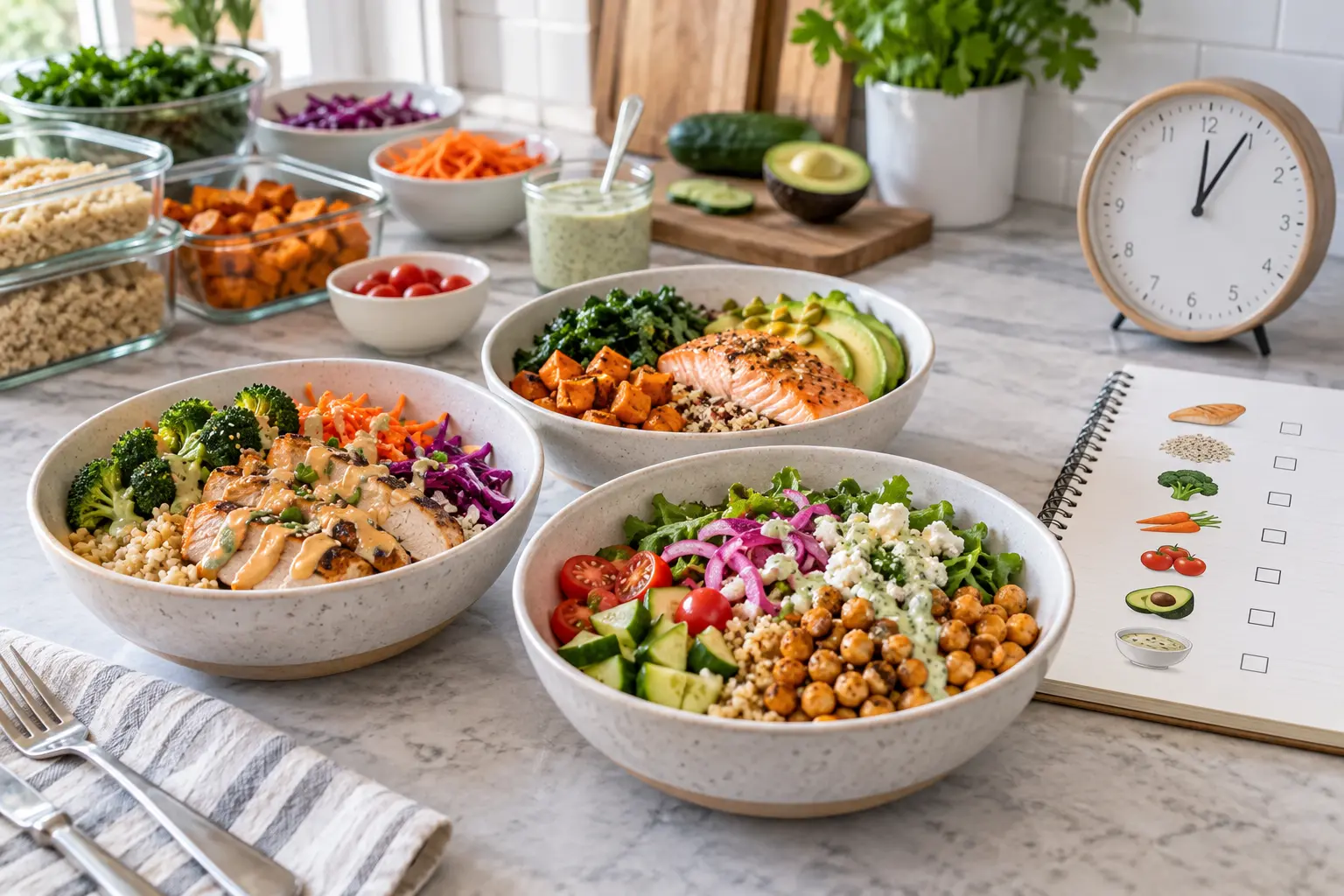
Prepare the decision points before departure
Check transport rules, hotel refrigeration, nearby groceries, breakfast options, and safe walking access. Pack allowed shelf-stable food such as a portioned nut mix, whole-grain crackers, or another familiar backup. Bring a refillable bottle and comfortable shoes.
Decide the goal for this trip. A demanding three-day conference may call for maintenance rather than a deficit. A longer vacation may use flexible meal anchors while leaving room for local food. The target should fit the purpose of travel.
Use a minimum viable travel day
Start with a meal containing protein and fruit or vegetables when available. At restaurants, choose the main item first, add produce and a carbohydrate that fits hunger, then decide whether alcohol, appetizer, or dessert matters most. No single choice is mandatory.
Walk terminals during safe delays, break up long sitting, and use a short hotel session only when it supports rather than steals sleep. Follow individualized advice for circulation or mobility risks during long journeys.
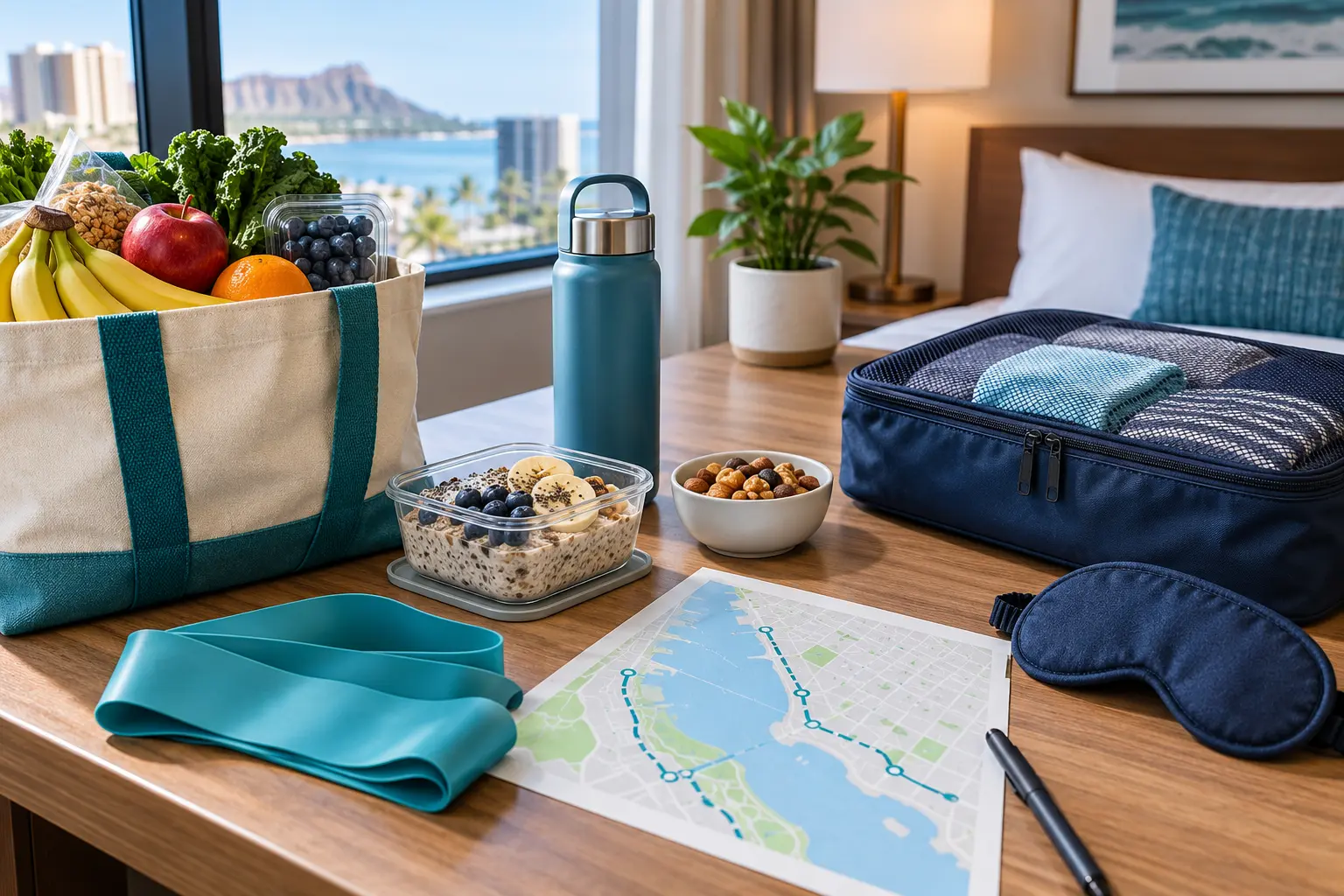
Design the return before leaving home
Arrange one easy meal or grocery delivery for the return day. Resume the usual breakfast, hydration, bedtime, and movement at the next reasonable opportunity instead of waiting for Monday.
Flight-related fluid shifts, restaurant sodium, carbohydrate, alcohol, constipation, and changed meal timing can raise scale weight. Wait several ordinary days, then compare averages. If a sustained rise remains, identify the first repeated travel behavior to redesign.
Practical eating on the road
- Breakfast: eggs, yogurt, oatmeal or fruit from the hotel buffet rather than pastries.
- Airports: look for salads, grain bowls, sandwiches with lean protein and a piece of fruit.
- Client dinners: choose a protein and vegetables as the base, and decide in advance about dessert and drinks.
- Room: keep fruit, nuts in measured portions, and water within reach.
Moving when time is short
Walk during layovers and between meetings, take stairs where safe, and use a short bodyweight routine in the room: squats, push-ups against the desk, lunges and planks for ten minutes. On long flights, stand and walk when possible and flex your calves to support circulation.
Choosing the right goal for the trip
For short trips, aiming to maintain weight is realistic and reduces stress. Expect the scale to be higher for a few days after returning because of salty food, travel fluid shifts and changed routines. Return to normal meals and activity and judge the trend after a week at home.
Where a supplement fits
Travel already disrupts sleep. Adding stimulant supplements to jet lag and late dinners can make sleep worse; skip them on travel days.
A supplement is not required to benefit from this guide. If your foundations are already in place, use the independent Fat Burn Active review to judge whether the formula has a useful optional role. If it fits your expectations and stimulant tolerance, check the current price on the official site. We may receive a commission.
Frequently asked questions
Must I lose weight while traveling?
No. Maintaining your weight on a busy trip is a reasonable and often better goal.
Should I pack every meal?
No. One or two reliable snacks and a plan for breakfast are usually enough.
When should I weigh after returning?
Wait several normal days at home and compare weekly averages rather than the first morning back.
Sources
- CDC Travelers' Health
- NIDDK: Keeping a Healthy Weight
- CDC: Tips for Healthy Eating
- Physical Activity Guidelines for Americans
- CDC: Blood Clots and Travel
Sources reviewed September 17, 2026. This article is general educational information, not medical advice, diagnosis, or treatment.