
Sedation is not restorative sleep
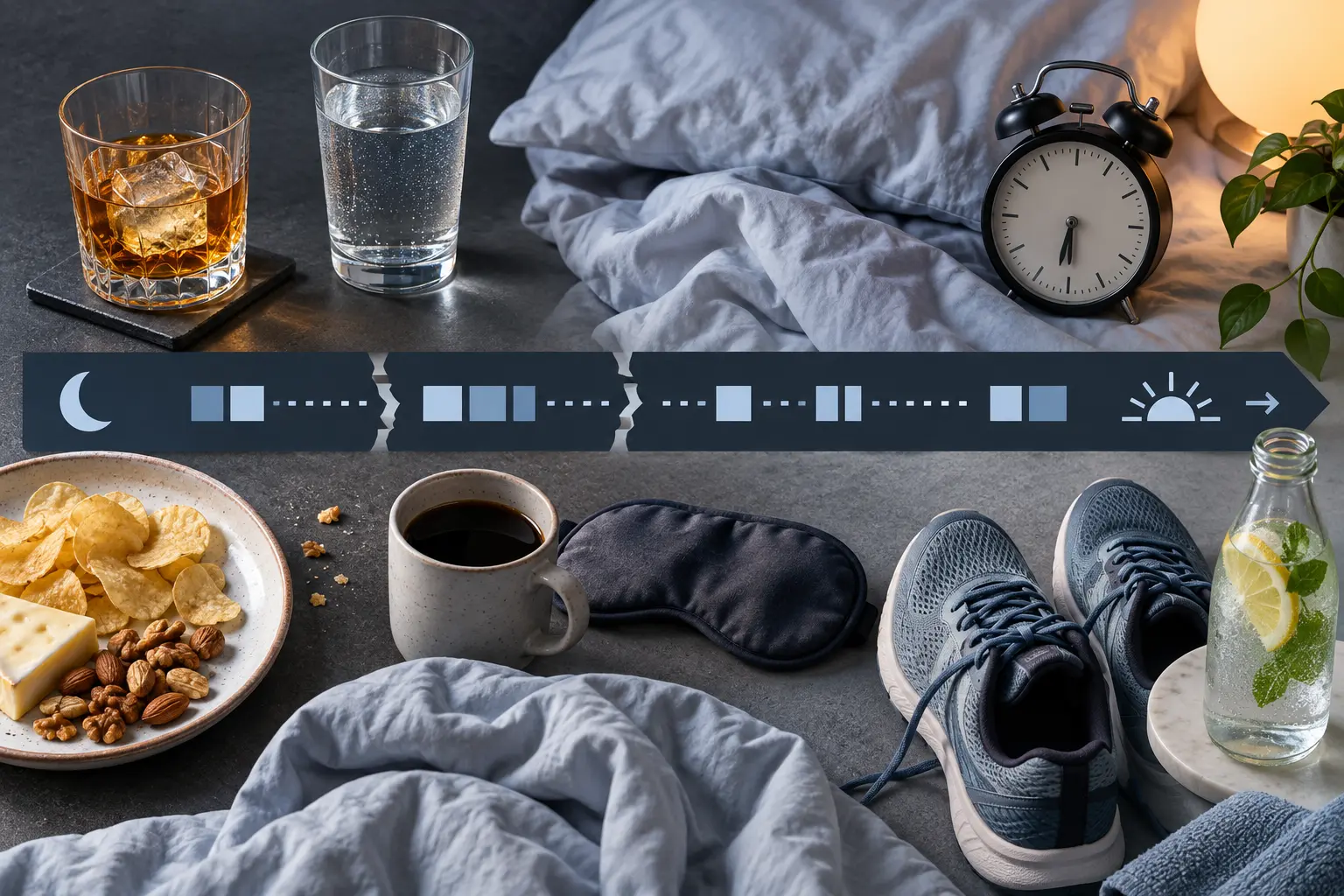
Alcohol's initial sedating effect can be mistaken for improved sleep. As the night continues and alcohol is metabolized, sleep may become lighter or more fragmented. Effects depend on dose, timing, tolerance, sex, age, health, medicines, and existing sleep problems.
Alcohol can relax upper-airway tissues and worsen breathing in susceptible people. Loud snoring, witnessed pauses, gasping, morning headaches, or marked daytime sleepiness should not be managed with a nightcap or a diet plan; they require assessment.
Count the recovery tail, not only the drink
None of these responses is inevitable, but counting only the beverage can miss a two-day change in behavior. Alcohol also shifts scale weight through fluid and food context; a short-term drop after dehydration is not fat loss.
A two-week alcohol-and-sleep experiment
- Record drink type, measured amount, start and finish time, food, and bedtime.
- Track awakenings, wake time, sleepiness, hunger, and next-day activity.
- Choose one change: fewer occasions, a smaller amount, or an earlier finish.
- Keep dinner and sleep opportunity reasonably comparable.
- Use alcohol-free drinks that do not trigger automatic refills.
- Compare both the drinking night and the following day.
Do not “save” all food calories for alcohol. A balanced meal supports safer decisions and reduces the chance that biological hunger combines with reduced restraint.
When reduction or avoidance is the better choice
No amount of alcohol is required for weight management or sleep. Avoiding it is the clearest option during pregnancy, before driving, with incompatible medicines, when advised for a health condition, or when drinking worsens control, mood, breathing, or sleep.
If moderation repeatedly fails, change the setting and access rather than creating stricter calorie arithmetic. Confidential medical or addiction support can address risk without judgment. A dependent person may require supervised withdrawal because abrupt cessation can be dangerous. Plan safe transport before drinking.
Why a nightcap backfires
Alcohol can make you fall asleep faster, but as it is metabolized during the night, sleep becomes lighter and more broken, and REM sleep is reduced. People often wake earlier and feel less rested. Even moderate amounts within a few hours of bedtime can have this effect.
Practical options
- Have your last drink at least three to four hours before bed.
- Keep drinking nights to the weekend or special occasions.
- Alternate with water and choose smaller servings.
- Try alcohol-free evenings for two weeks and compare sleep and next-day appetite.
If you find it hard to cut down, the NIAAA Alcohol Treatment Navigator and your doctor can help.
Where a supplement fits
Combining alcohol with stimulants makes it harder to judge how impaired or tired you are. Avoid using caffeine products to counter a poor night after drinking.
A supplement is not required to benefit from this guide. If your foundations are already in place, use the independent Fat Burn Active review to judge whether the formula has a useful optional role. If it fits your expectations and stimulant tolerance, check the current price on the official site. We may receive a commission.
Frequently asked questions
Does alcohol help sleep?
It may shorten the time to fall asleep but tends to make sleep less restful later in the night.
How long before bed should I stop drinking?
At least three to four hours is a sensible starting point; less alcohol overall helps more.
Does a hangover affect appetite?
Many people crave energy-dense food after poor sleep and drinking, so plan easy, filling meals.
What should I change first?
Start with the drinking occasion that most often disrupts sleep or leads to late eating.
Sources
- NIAAA: Alcohol and the human body
- Alcohol and sleep physiology review
- CDC: About sleep
- Dietary Guidelines: Alcoholic beverages
- NIAAA Alcohol Treatment Navigator
Sources reviewed September 15, 2026. This article is general educational information, not medical advice, diagnosis, or treatment.